Table of Contents
ToggleIntroduction
In today’s fast-moving financial markets, not everyone has the skills or time to trade effectively. This is where copy trading comes in. It allows individuals to follow and replicate the strategies of experienced traders automatically. Instead of spending hours analyzing charts and studying reports, beginners can learn and potentially profit by mirroring professionals.
The rise of online platforms and easy access to trading apps has made copy trading more popular than ever. It not only benefits new investors but also allows skilled traders to earn extra income by sharing their strategies with others. In short, copy trading creates a win-win situation for both followers and professionals.

What is Copy Trading?
Copy trading is a form of social trading where you copy the trades of another trader in real time. Whenever the chosen trader buys or sells, the same action happens in your account automatically.
For example, if a professional invests 5% of their balance in a forex pair, the same percentage is invested in your account. This means you don’t have to make manual decisions or watch the market 24/7.
Most platforms offering copy trading provide rankings of top-performing traders. You can see their past performance, risk levels, and number of followers before deciding whom to copy. This transparency makes it easier for beginners to choose a strategy that matches their goals.
Why It’s Gaining Popularity
One reason copy trading is booming is accessibility. Beginners who find trading complicated can jump in quickly without deep knowledge of the markets. It acts as both a learning tool and an investment method.
It’s also time-saving. Traditional trading requires constant research, monitoring, and quick decision-making. Copy trading automates this process, which is ideal for busy people who want market exposure but can’t trade full-time.
Another factor is diversification. Investors can follow multiple traders with different strategies, spreading their risk across markets like forex, stocks, or crypto. This makes copy trading appealing for those who want a balanced approach.
Lastly, the growth of cryptocurrency trading has pushed copy trading further into the spotlight. Many people are interested in crypto but don’t know how to trade it. By copying experts, they can participate in the market confidently.
How Copy Trading Works
Copy trading is designed to simplify the investment process. Instead of making independent trading decisions, an investor links their account to a professional trader’s account. Every time the expert enters or exits a trade, the same action is mirrored in the investor’s account automatically.
This system ensures that beginners don’t need to constantly monitor the market. They benefit from the experience and strategies of skilled traders while focusing on other tasks. The process is seamless, making it one of the easiest ways to participate in financial markets without deep technical knowledge.
The Basic Mechanism
At its core, copy trading works on a “mirror trading” model. When you choose a trader to copy, your account is programmed to replicate their trades in real time. The allocation is usually proportional to your investment size.
For example, if the trader invests 10% of their account balance in gold, and you’ve allocated $1,000 to copy them, then $100 from your account will be used for the same trade. Profits and losses are also reflected in the same proportion.
The key advantage here is automation. You don’t need to execute trades manually, which reduces emotional decision-making and keeps the process consistent.

Platforms & Tools Used
Several online platforms and brokers offer copy trading services. Popular ones include eToro, ZuluTrade, and CopyFX, but many forex and crypto brokers now provide built-in copy trading features as well.
These platforms usually display a leaderboard of top-performing traders. The list often includes performance metrics like profit percentage, risk score, average trade duration, and number of followers. This transparency helps investors choose the right trader to follow based on their goals.
Tools like risk management settings are also provided. Investors can limit the amount of capital allocated, set stop-loss levels, or stop copying a trader anytime. This flexibility ensures users maintain control over their accounts even while following others.
Is Copy Trading Legal?
The legality of copy trading varies by country and its financial regulations. In many regions, it is permitted as long as it is conducted through licensed platforms or regulated brokers. However, the specific rules and requirements can differ widely from one jurisdiction to another.
Regulators primarily aim to safeguard investors against fraud, scams, and irresponsible financial activities. For this reason, some countries categorize copy trading as a type of “portfolio management,” while others define it as “social trading” or “investment services.”
Global Regulatory Perspective
Globally, regulators acknowledge that copy trading can benefit investors, but they also highlight potential risks. Since it involves real money and financial markets, regulators want platforms to follow strict rules on transparency, risk disclosure, and investor protection.
Most reputable copy trading platforms are registered with financial authorities, ensuring that traders and investors operate in a safe and compliant environment. That said, the level of oversight varies depending on the jurisdiction.
Can You Profit From Copy Trading?
The big question most investors ask is whether copy trading can actually deliver profits. The answer is yes, but it depends on several factors—such as the trader you follow, your risk tolerance, and the platform you use. Copy trading gives beginners a chance to benefit from experienced traders, but it is not a guaranteed path to wealth. Like all forms of trading, profits and losses are possible.
The real advantage lies in reducing the learning curve. Instead of spending years mastering charts and strategies, you can gain exposure to the market quickly. However, success still requires smart choices and proper risk management.

Advantages for Beginners & Busy Traders
Copy trading is especially appealing to beginners. New investors often lack the confidence and skills to trade independently. By following a professional, they can participate in markets like forex, stocks, or crypto without making every decision themselves.
It is also ideal for busy professionals. Many people want to trade but don’t have the time to research and monitor the market all day. Copy trading automates the process, allowing them to benefit from market opportunities while focusing on their careers or businesses.
Potential Returns vs. Traditional Trading
In traditional trading, profits depend entirely on your personal skills, strategies, and discipline. This can take years of practice to master. Copy trading, on the other hand, allows you to “borrow” the expertise of others.
Potential returns can be attractive if you choose the right trader to follow. However, returns are never guaranteed. The performance of your account is tied to the trader you copy—if they lose money, so will you.
The key difference is that copy trading reduces the barrier to entry. It allows beginners to access potential profits without needing to become full-time traders.
Case Studies & Real-World Examples
Consider a beginner who invests $1,000 in a copy trading platform and chooses a forex trader with a steady track record. Over six months, the professional earns a 15% return. As a result, the beginner also gains $150, minus any platform fees.
Another example comes from cryptocurrency trading. Many traders who started copying experienced Bitcoin or Ethereum traders during bullish markets saw significant profits. However, those who copied during bearish conditions sometimes experienced losses.
These cases show that while copy trading can be profitable, it also comes with risks. The outcome depends heavily on timing, trader selection, and market conditions.

Risks and Challenges
While copy trading offers convenience and accessibility, it is not without risks. Many beginners see it as an easy path to profits, but they often overlook the challenges involved. Understanding these risks is essential before investing real money.
Tips for Successful Copy Trading
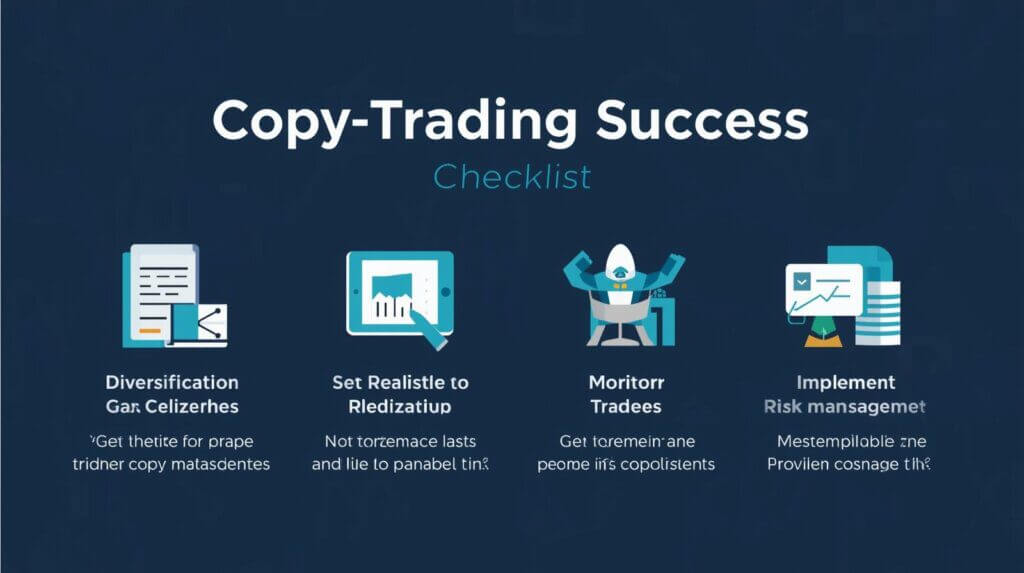
Copy trading is an exciting way to participate in financial markets without having to master trading strategies yourself. However, just like traditional investing, success depends on how you manage risks and approach the process. Many beginners believe that copy trading is completely hands-off, but the truth is that careful planning and monitoring are essential. Below are some practical tips to make your copy trading journey more effective and rewarding.
Diversification Strategies
One of the most powerful tools in investing is diversification, and the same rule applies to copy trading. Relying on a single trader or one market is risky, because even experienced professionals have losing streaks. To protect yourself, spread your funds across multiple traders with different strategies and asset classes.
For example, you might allocate part of your capital to a forex trader who focuses on EUR/USD, another portion to a stock trader specializing in tech companies, and a third share to a crypto trader. If one trader underperforms, the others can balance out the losses. This reduces overall risk and makes your returns more stable.
Diversification also allows you to explore different trading styles. Some traders prefer long-term strategies, while others focus on short-term scalping. By combining both, you can gain exposure to multiple approaches and strengthen your portfolio.

Setting Realistic Expectations
A common mistake many beginners make is expecting quick and massive profits from copy trading. While some traders do post impressive results, it is unrealistic to assume that every month will bring huge returns. Financial markets are unpredictable, and even skilled traders face setbacks.
Instead of aiming for overnight wealth, set realistic goals. Think of copy trading as a way to grow your money steadily over time. Even modest gains of 5–10% annually can be meaningful if they are consistent. Remember, sustainable growth is always better than chasing risky opportunities that may lead to heavy losses.
It’s also important to understand that copy trading involves risk. No trader has a 100% success rate, and losses are part of the process. By accepting this reality, you’ll be less likely to panic when the market moves against you. Patience and discipline are just as important as the traders you choose to follow.
Monitoring & Adjusting Regularly
Although copy trading automates much of the process, it does not mean you should ignore your account. Markets change, and a trader who performed well in the past may start struggling in the future. That’s why regular monitoring is critical.
Keep an eye on the traders you are following and evaluate their performance over time. If you notice a decline in consistency or risk management, don’t hesitate to reduce your allocation or stop copying them altogether. Many platforms provide statistics such as win rate, average trade length, and risk score—use these tools to make informed decisions.
Adjusting your strategy is equally important. You may want to increase your investment in traders who show steady performance while cutting back on those with higher volatility.
Copy Trading in Forex vs. Crypto
Copy trading is widely used in both the forex market and the cryptocurrency market, but the dynamics in each are quite different. While the concept of copying trades remains the same, the assets, risks, and opportunities vary depending on the market. Understanding these differences helps investors decide where to focus their efforts.
Forex copy trading has been around for much longer and is often seen as more stable and regulated. On the other hand, crypto copy trading is relatively new but has grown rapidly due to the popularity of digital currencies like Bitcoin and Ethereum. Both markets attract different types of investors and offer unique advantages.
Which Market Offers Better Potential?
The answer depends on the type of investor you are. If you value stability, regulation, and long-term consistency, forex copy trading may be the better choice. It provides a safer environment for beginners and is less prone to sudden, extreme market swings.
If you are more risk-tolerant and seeking higher rewards, crypto copy trading might appeal to you. The market’s volatility can amplify profits quickly, but it requires accepting the possibility of sharp losses. For many traders, crypto feels more exciting, but it demands stronger risk management.
A balanced approach could be to diversify across both markets. For example, you might allocate part of your funds to forex for stability while experimenting with crypto for higher growth potential. This way, you can benefit from both worlds without relying too heavily on one.
Future of Copy Trading
Copy trading has already transformed the way individuals participate in financial markets, but its future looks even more promising. As technology continues to advance, the next wave of innovation will make copy trading more intelligent, transparent, and accessible. From artificial intelligence to blockchain integration, several trends are shaping the future of this investment method.
AI & Automated Copying
Artificial intelligence (AI) is expected to play a major role in the future of copy trading. Currently, copy trading relies on mirroring human traders. However, AI-driven systems can analyze massive amounts of data, detect patterns, and execute trades faster than any human.
Imagine a copy trading platform where you don’t just follow a trader but also copy an AI-powered strategy that adapts in real time. These systems could adjust risk levels, identify profitable opportunities, and minimize losses automatically. This would reduce human error and help traders achieve more consistent results.
Moreover, AI could assist in evaluating which signal providers to follow. By analyzing a trader’s performance history, behavior, and risk management style, AI can recommend the most suitable traders for an investor’s specific goals. This personalized approach will likely make copy trading smarter and more efficient.

Social Trading Communities
The future of copy trading will also be shaped by stronger social trading communities. Currently, many platforms already allow users to see leaderboards and follow top traders. In the future, these communities are expected to become more interactive, much like social media networks for investors.
Users may be able to join groups, discuss strategies in real time, and even co-create trading ideas. This would make copy trading not only a financial activity but also a learning environment. Beginners could directly interact with professionals, ask questions, and gain insights into decision-making processes.
As social features expand, transparency will also increase. Instead of simply seeing performance numbers, investors may gain access to deeper insights such as risk management strategies, trader psychology, and live trading discussions. This sense of community will make copy trading more engaging and trustworthy.
Integration with Blockchain & DeFi
One of the most exciting developments is the potential integration of copy trading with blockchain technology and decentralized finance (DeFi). Blockchain can bring unmatched transparency, ensuring that all trade histories are recorded on a public ledger.
DeFi platforms could take copy trading to a new level by eliminating middlemen. Smart contracts could directly link investors with traders, automatically executing trades and handling profit-sharing without centralized control. This would lower costs, speed up transactions, and make copy trading accessible to a global audience.
Cryptocurrency copy trading is already popular, but blockchain-based platforms could expand it further by allowing investors to copy strategies across a wide range of digital assets, including tokens, NFTs, and yield-generating DeFi protocols.
Conclusion
Copy trading has emerged as one of the most popular ways for individuals to enter financial markets without needing years of experience. By allowing investors to mirror the trades of professionals, it creates opportunities for learning, diversification, and potential profits. At the same time, it is not risk-free and requires careful planning and monitoring.