Table of Contents
ToggleIntroduction
Future trading, often referred to as futures trading, is one of the most dynamic areas of the financial markets. It involves contracts that obligate traders to buy or sell an asset at a predetermined price and date in the future. Unlike traditional investing, where people usually purchase assets like stocks or commodities to hold for the long term, futures allow participants to speculate on price movements or hedge against potential risks. Because of its flexibility and high liquidity, futures trading has grown into a vital part of the global economy.
Why Future Trading Matters in Modern Markets
In today’s fast-paced financial world, future trading plays a crucial role in ensuring stability and efficiency across markets. One of the primary reasons it matters is price discovery. Futures markets provide a transparent mechanism where supply and demand interact to determine the fair value of assets such as oil, gold, agricultural products, or even stock indexes. This process helps investors, businesses, and governments make informed decisions.
Another significant benefit is risk management. Companies that rely on commodities—like airlines using fuel or farmers producing crops—use futures contracts to hedge against price volatility. By locking in prices, they protect themselves from sudden spikes or drops that could harm their profits. Without futures trading, many industries would be far more vulnerable to unexpected economic shocks.
Additionally, futures trading enhances liquidity in the financial system. The constant buying and selling of contracts create opportunities for investors of all sizes to enter and exit markets quickly. This accessibility not only helps large institutions but also supports individual traders who want to participate in global markets.
Futures are also important for global integration. They connect markets across different countries, allowing capital to flow freely and efficiently. For example, the price of crude oil futures on international exchanges often influences energy costs worldwide. This interconnectedness highlights why futures are essential in shaping global economic trends.
Who Can Benefit from Learning About It
One of the most appealing aspects of future trading is that it offers opportunities for a wide range of people. Individual investors can benefit by diversifying their portfolios and exploring markets beyond traditional stocks and bonds. For those who understand the risks and strategies, futures trading can be a powerful way to grow wealth or protect existing investments.
Businesses and corporations stand to gain even more from futures. For instance, exporters and importers can use futures contracts to protect themselves from fluctuations in foreign exchange rates. Similarly, manufacturers depending on raw materials can stabilize their costs and ensure consistent pricing.
Financial professionals, such as portfolio managers and analysts, find futures trading valuable as it allows them to manage client risk more effectively. It also opens the door to more advanced strategies, including arbitrage and spread trading, which can provide steady returns in volatile conditions.
Even students and aspiring traders can benefit by studying futures markets. Learning how these contracts work builds a strong foundation in finance, economics, and risk management. It develops analytical skills that are transferable to other areas of investing or business.
Ultimately, future trading is not limited to a particular group. Whether you are a small retail trader, a multinational corporation, or a financial advisor, understanding futures provides you with tools to make smarter, more informed decisions.
What Is Future Trading?
Future trading, also known as futures trading, is a financial activity where buyers and sellers enter into contracts to exchange an asset at a specific price on a set date in the future. These assets can include commodities like oil, wheat, and gold, as well as financial instruments such as stock indexes, bonds, or currencies. The contract itself, called a futures contract, does not necessarily mean that traders want to own the asset physically. Instead, they are often speculating on how the price of the asset will move.
At its core, future trading is about predicting price movements. If a trader believes the price of gold will rise, they might buy a futures contract today to sell it at a higher price later. This flexibility makes futures trading both attractive and risky, depending on how well traders manage their decisions.
Unlike traditional investing, which often focuses on long-term growth, futures are generally short- to medium-term instruments. This dual purpose is what makes futures unique and widely used in both professional and retail markets.
Definition and Core Concept
The core concept of futures trading lies in the agreement between two parties. One agrees to buy, and the other agrees to sell, an asset at a pre-agreed price and time. This standardization ensures transparency and fairness in trading.
Another important point is that most futures contracts are not settled by the actual delivery of the commodity. Instead, they are closed before expiration, and traders profit or lose based on the price difference. This allows people to trade futures without having to worry about storing barrels of oil or bushels of wheat.
This amplifies both potential profits and potential losses, making futures one of the most powerful yet high-risk financial tools.
How It Differs from Other Types of Trading
Future trading is often compared to other popular markets such as stocks, forex, and options, but each type of trading has its own unique structure.
Stocks: When trading stocks, you are buying ownership in a company. Your profits depend on the company’s performance and share price growth over time. In contrast, futures do not provide ownership of an asset—they only allow you to speculate on its price.
Forex: The forex market deals with the direct exchange of one currency for another. Futures can also involve currencies, but they are traded through contracts on regulated exchanges, not in the decentralized manner of forex.
Options: Options give traders the right, but not the obligation, to buy or sell an asset at a certain price before a set date. Futures, however, are binding agreements—both parties must fulfill the contract unless they close the trade before expiration. This makes futures riskier than options, as obligations are mandatory.
How Future Trading Works
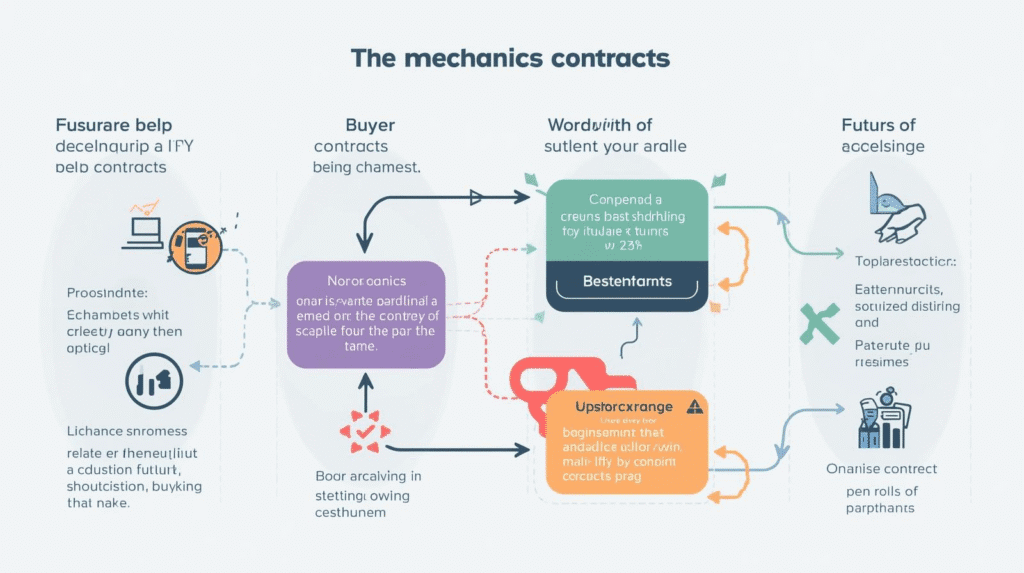
Future trading might seem complicated at first, but at its heart, it is built around a simple concept: a contract between two parties. These contracts are standardized and traded on regulated exchanges, which ensures transparency and fairness for everyone involved.
Futures allow traders to speculate on the price of an asset or hedge against potential risks. Instead of directly buying the asset itself, such as barrels of oil or bushels of corn, traders buy and sell contracts that represent the future delivery of those assets. Most participants never actually take delivery of the physical goods—they close their positions before the contract expires.
The Role of Contracts
The futures contract is the backbone of the market. Each contract specifies the asset being traded, the quantity, the price, and the expiration date. For example, a crude oil futures contract might represent 1,000 barrels of oil to be delivered in three months.
What makes futures contracts unique is their standardization. Everyone knows exactly what each contract represents, which creates consistency and reliability across the market. This allows participants to focus on trading price movements rather than negotiating individual terms.
Another important feature of futures contracts is margin trading. Instead of paying the full value of the contract, traders only deposit a fraction of it, known as the margin. This leverage increases both the potential profits and the potential losses, making futures powerful but also risky.
Buyers, Sellers, and Market Participants
There are generally two main types of participants in futures markets: hedgers and speculators.
Hedgers are businesses or individuals who use futures contracts to protect themselves against price volatility. For example, a farmer might sell wheat futures to lock in a price before harvest, ensuring they are not hurt if prices drop later. Similarly, an airline might buy fuel futures to guard against rising oil prices.
Speculators, on the other hand, are traders who aim to profit from price movements. They are not interested in the actual commodity or asset; instead, they buy and sell futures contracts based on where they think prices will go. Speculators provide liquidity to the market, making it easier for hedgers to enter and exit trades.
Apart from these two, there are also institutional investors such as hedge funds and banks, who use futures for complex strategies. Market makers and brokers also play key roles by facilitating trades and ensuring smooth functioning of the exchanges.
Types of Futures Contracts
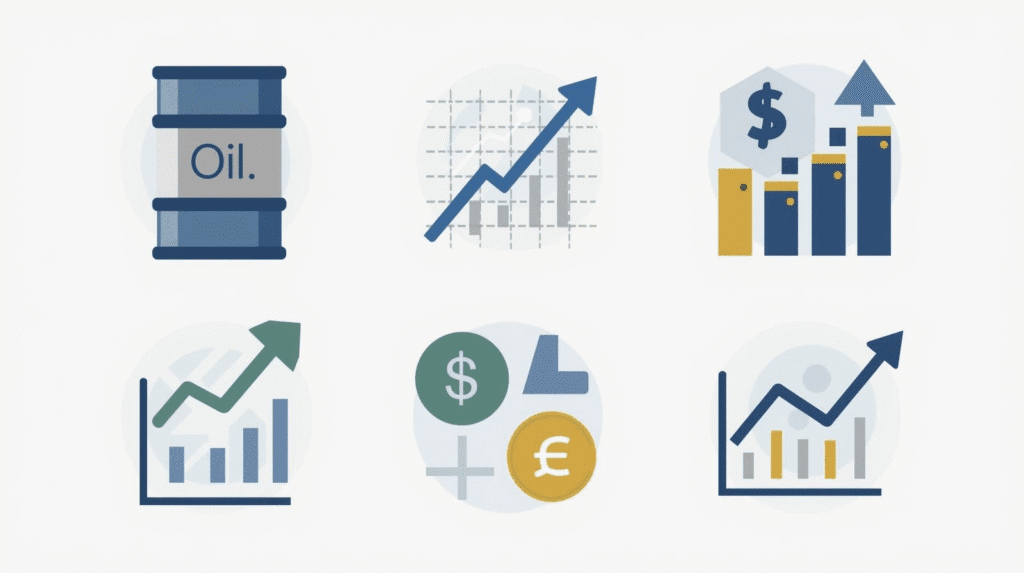
Commodity Futures
Commodity future are the oldest and most traditional form of futures trading. They involve contracts on physical goods such as crude oil, natural gas, gold, silver, wheat, corn, coffee, and livestock. Farmers, producers, and manufacturers often use these contracts to protect themselves from sudden price swings.
For example, a wheat farmer might sell wheat futures before harvest to lock in a price. This guarantees a stable income even if wheat prices drop later. On the other hand, food companies or millers may buy wheat futures to secure supply at a predictable price.
Commodity futures are also popular with speculators who want to profit from movements in commodity prices. Because commodities are affected by factors like weather, geopolitics, and supply disruptions, these markets can be highly volatile, creating opportunities for traders.
Index Futures
Index futures are contracts based on stock market indexes, such as the S&P 500, NASDAQ, or Dow Jones in the United States. Since these contracts cover a wide range of companies, they are considered less risky than betting on a single stock. Index futures also play a big role in maintaining liquidity and stability in global financial markets.
Currency Futures
Currency futures, also known as foreign exchange (FX) futures, involve contracts to buy or sell a currency at a specific price on a future date. These are commonly traded for major currencies such as the U.S. dollar, euro, Japanese yen, and British pound.
Businesses engaged in international trade use currency futures to hedge against exchange rate risks. For example, a U.S. company that expects payment in euros months later might use euro futures to lock in today’s exchange rate, avoiding losses if the euro weakens.
Speculators also trade currency futures to profit from fluctuations in foreign exchange markets. Because global trade and financial flows heavily influence currencies, these futures are among the most actively traded worldwide.
Interest Rate Futures
Interest rate futures are contracts based on debt instruments or benchmarks like government bonds and Treasury bills.
Speculators may trade these contracts based on expectations of central bank policies, inflation, or economic data. Interest rate futures are especially important in times of economic uncertainty, as they provide insights into market expectations for future rate changes.
Future Trading Strategies
Future trading is not just about buying and selling contracts—it’s about applying the right strategies to achieve specific goals. Traders and businesses use futures differently depending on whether they want to protect themselves from risk or seek profit opportunities. Three common approaches are hedging, speculation, day trading, and swing trading. Each comes with unique methods and risk levels.
Hedging vs. Speculation
Hedging is a strategy used to reduce risk. Businesses and investors enter futures contracts to protect themselves from unfavorable price movements. For example, an airline company might buy oil futures to secure fuel prices for the next six months. Even if oil prices rise, the company’s costs remain stable. Hedging does not aim for big profits—it focuses on financial stability.
speculation
For instance, a trader may predict that gold prices will rise and buy gold futures to sell later at a higher price. Speculation is riskier than hedging, but it creates liquidity in the market and can generate significant returns for skilled traders.The key difference is motivation: hedgers use futures for protection, while speculators use them for opportunity. Both strategies are essential, as hedgers provide stability and speculators provide liquidity.
Day Trading Futures
Day traders rely heavily on technical analysis, charts, and indicators. They often use strategies like scalping, where many small trades are made throughout the day, or momentum trading, where they ride short bursts of price movement.
One advantage of day trading is that traders do not hold positions overnight, avoiding risks from unexpected news or market gaps. However, it requires constant focus, quick decision-making, and the ability to manage stress. Because of leverage, day trading futures can generate fast profits but also large losses if not managed carefully.
Swing Trading Futures
Swing trading is a medium-term strategy where traders hold futures positions for several days or weeks. Instead, they focus on broader trends and market patterns.
Swing traders often use a combination of technical and fundamental analysis. For example, they may study chart patterns, moving averages, and also pay attention to economic data or supply-demand changes. A swing trader might buy corn futures if they expect prices to rise due to poor weather conditions affecting crops.
This strategy requires patience and discipline. While swing trading avoids the intensity of day trading, it carries the risk of overnight price gaps and sudden market events. Still, many traders prefer swing trading because it balances short-term opportunities with less stress than daily trading.
Future of Future Trading
Future trading has always evolved with changes in technology and global finance. In the past, traders placed orders on the floor of exchanges. Today, most futures trades happen electronically with advanced software and global connectivity. Looking ahead, the future of futures trading will be shaped by artificial intelligence (AI), automation, blockchain, and decentralized finance (DeFi). These innovations are already transforming markets and are expected to play an even greater role in the coming years.
AI and Automation
Artificial intelligence is revolutionizing how future tradind is done. AI systems can process massive amounts of data in real time, something that no human trader could ever match.
Automation goes hand in hand with AI. Automated trading systems, also known as algorithmic trading or “algo trading”, allow traders to set rules for entering and exiting trades. Once the system is programmed, it can execute trades instantly when conditions are met. This reduces emotional decision-making and helps capture opportunities faster.
Large financial institutions already rely on AI and automation for futures trading. However, as technology becomes more affordable, even individual traders are gaining access to these advanced tools. This means the future of futures trading will likely involve greater efficiency, tighter spreads, and more opportunities for traders who know how to leverage technology.

Conclusion
Futures trading opens the door to both exciting opportunities and significant risks. Whether you’re aiming to hedge against market volatility, speculate on price movements, or diversify your portfolio, understanding how futures work is the first step toward success. The key lies in education, discipline, and proper risk management. With the right strategy, clear goals, and patience, futures can be a powerful tool to build wealth and protect investments in today’s ever-changing financial markets. Remember: trading the future is not about predicting with certainty, but about preparing wisely for the possibilities ahead.