Table of Contents
Toggle1. What is Forex Trading?
Forex trading for beginners is the process of buying one currency and selling another at the same time to make a profit. The word “Forex” stands for Foreign Exchange, and it is the largest financial market in the world.
In simple terms, forex trading for beginners means exchanging currencies like you would when traveling to another country. For example, if you convert US dollars into euros, you are participating in the forex market. Traders do the same thing, but their goal is to make money from changes in currency prices.
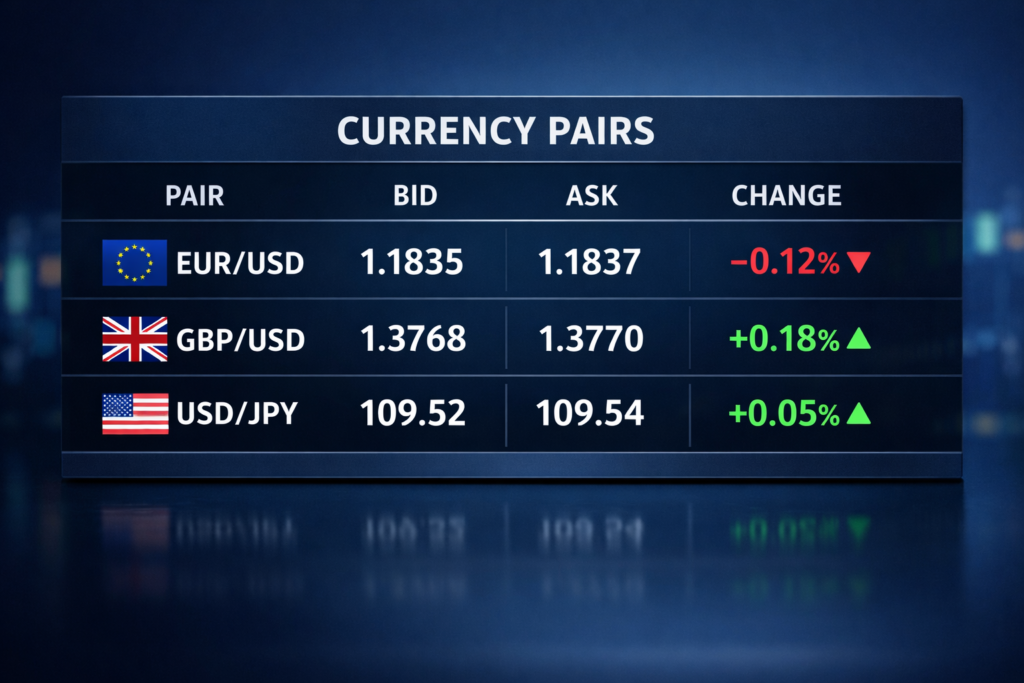
In forex trading for beginners, currencies are always traded in pairs, such as EUR/USD or GBP/USD. The first currency is called the base currency, and the second is the quote currency. When you trade, you are predicting whether the value of one currency will go up or down compared to the other.
The main idea behind forex trading for beginners is simple:
- Buy a currency pair if you think the price will go up
- Sell a currency pair if you think the price will go down
For example, if you believe the euro will become stronger than the US dollar, you buy EUR/USD. If your prediction is correct, you make a profit.
One important thing to understand in forex trading for beginners is that the market operates 24 hours a day, five days a week. This makes it very flexible for traders around the world.
Overall, forex trading for beginners is about learning how currency prices move and making smart decisions based on market trends. With proper knowledge and practice, beginners can gradually improve their trading skills and confidence.
2. How Does the Forex Market Work?
The foreign exchange market is a global system where currencies are traded 24 hours a day. Understanding how it operates is essential in forex trading for beginners, as it helps traders make better decisions and manage risk effectively.
In forex trading for beginners, the market works through a network of banks, brokers, and financial institutions rather than a central exchange. This is why it is called an over-the-counter (OTC) market. Traders from all over the world participate by buying and selling currency pairs based on price movements.
One key concept in forex trading for beginners is that currencies are always traded in pairs, such as EUR/USD or USD/JPY. When you place a trade, you are simultaneously buying one currency and selling another. The value of these currencies changes constantly due to supply and demand.
Another important aspect of forex trading for beginners is market timing. The forex market operates in different sessions, including the Asian, European, and US sessions. These sessions overlap, creating high trading activity and more opportunities for traders to enter or exit positions.
Prices in forex trading for beginners are influenced by many factors, including economic news, interest rates, political events, and global market sentiment. For example, if a country’s economy is strong, its currency may increase in value.
In forex trading for beginners, traders use brokers and trading platforms to access the market. These platforms provide real-time charts, tools, and indicators that help analyze price movements and execute trades quickly.
Leverage is another feature in forex trading for beginners that allows traders to control larger positions with a small amount of capital. While this can increase profits, it also increases risk, so it must be used carefully.
Overall, forex trading for beginners works by analyzing the market, predicting price movements, and placing trades accordingly. With practice and proper understanding, beginners can learn how the market behaves and improve their trading strategies over time.
3. Key Forex Terms Every Beginner Must Know
Understanding basic terminology is essential in forex trading for beginners, as it builds a strong foundation for making smart trading decisions. Below are the most important terms every new trader should learn.
3.1 Currency Pairs
In forex trading for beginners, currencies are always traded in pairs, such as EUR/USD or GBP/USD. A currency pair shows the value of one currency compared to another. The first currency is called the base currency, and the second is the quote currency. When you trade, you are predicting whether the base currency will rise or fall against the quote currency.
3.2 Pips
A pip is the smallest price movement in a currency pair. In forex trading for beginners, most currency pairs are quoted to four decimal places, and a pip represents the last digit. For example, if EUR/USD moves from 1.1000 to 1.1001, that is a one-pip movement. Pips are used to measure profit and loss in trading.
3.3 Leverage
Leverage allows traders to control a large position with a small amount of money. In forex trading for beginners, brokers offer leverage like 1:50 or 1:100. This means you can trade $1,000 with just $10 or $20. While leverage can increase profits, it also increases risk, so beginners should use it carefully.
3.4 Spread
The spread is the difference between the buying price (ask) and the selling price (bid) of a currency pair. In forex trading for beginners, this is the cost you pay to the broker for executing a trade. Lower spreads are better because they reduce your trading costs and improve potential profits.
3.5 Lot Size
Lot size refers to the number of units you are trading in the market. In forex trading for beginners, there are different types of lot sizes:
- Standard lot = 100,000 units
- Mini lot = 10,000 units
- Micro lot = 1,000 units
Choosing the right lot size is very important in forex trading for beginners because it directly affects your risk and profit potential.
Step 1: Educate Yourself Before Trading
The first and most important step in forex trading for beginners is to educate yourself before risking any real money. Many new traders jump into the market without proper knowledge, which often leads to losses. Taking time to learn the basics can significantly increase your chances of success.
In forex trading for beginners, education starts with understanding how the market works. You need to learn about currency pairs, market trends, and what causes price movements. This includes both technical analysis (charts and indicators) and fundamental analysis (economic news and events).
Another key part of forex trading for beginners is learning how to use a trading platform. Platforms like MetaTrader allow you to analyze charts, place trades, and manage your account. Practicing on these platforms helps you gain confidence before trading with real money.
You should also focus on risk management strategies in forex trading for beginners. This includes understanding stop-loss, take-profit, and how much of your capital to risk on each trade. Without proper risk management, even good strategies can fail.
Reading books, watching tutorials, and following experienced traders are great ways to improve your knowledge in forex trading for beginners. There are many free and paid resources available online that can help you build a strong foundation.
Another effective method in forex trading for beginners is using a demo account. A demo account allows you to trade with virtual money in real market conditions. This helps you practice strategies and understand market behavior without financial risk.
Overall, education is the backbone of success in forex trading for beginners. The more you learn and practice, the better your chances of becoming a profitable trader in the long run.
Step 2 : Choose the Right Forex Broker
Choosing the right broker is a crucial step in forex trading for beginners, as it directly affects your trading experience, security, and profitability. A reliable broker provides access to the market, executes your trades, and ensures your funds are safe.
In forex trading for beginners, the first thing to check is whether the broker is regulated. A regulated broker follows strict financial rules and offers better protection for traders. Always choose brokers that are licensed by well-known financial authorities.
Another important factor in forex trading for beginners is trading costs. Brokers make money through spreads and commissions, so it’s important to select one with low and transparent fees. Lower costs mean higher potential profits over time.
The trading platform is also a key element in forex trading for beginners. A good broker should offer a user-friendly platform like MetaTrader 4 or MetaTrader 5. These platforms provide tools for chart analysis, indicators, and fast trade execution.
Customer support is often overlooked in forex trading for beginners, but it is very important. You should choose a broker that offers 24/7 support and responds quickly to your queries, especially when dealing with technical or financial issues.
In forex trading for beginners, deposit and withdrawal options matter a lot. Make sure the broker supports convenient payment methods available in your country and allows fast withdrawals without hidden charges.
Another key feature in forex trading for beginners is the availability of a demo account. A good broker will offer a demo account so you can practice trading without risking real money before going live.
Overall, selecting the right broker is a foundation step in forex trading for beginners. Take your time to compare different brokers, read reviews, and choose one that fits your needs for a safe and smooth trading journey.
Step 3: Learn to Read Forex Charts
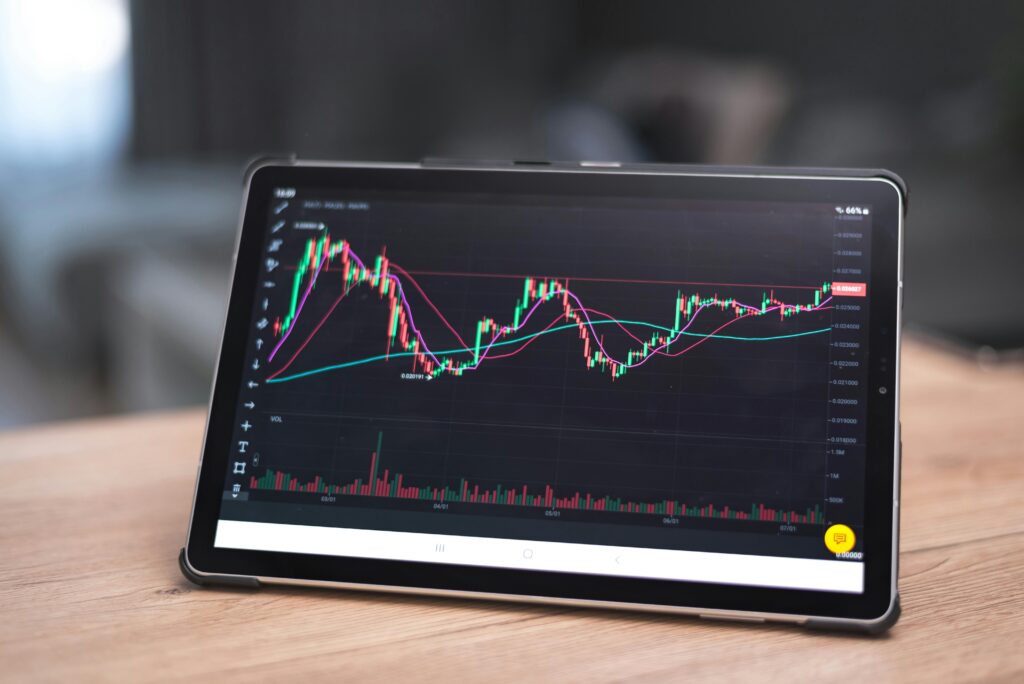
Learning how to read charts is a key skill in forex trading for beginners, as it helps you understand market trends and make informed trading decisions. Charts visually represent price movements over time, allowing traders to analyze patterns and predict future price direction.
In forex trading for beginners, there are three main types of charts: line charts, bar charts, and candlestick charts. Among these, candlestick charts are the most popular because they provide detailed information about price action, including opening, closing, high, and low prices.
One of the most important concepts in forex trading for beginners is identifying trends. A trend shows the general direction of the market—uptrend (prices rising), downtrend (prices falling), or sideways (no clear direction). Recognizing trends helps traders decide whether to buy or sell.
Another essential part of forex trading for beginners is understanding support and resistance levels. Support is a price level where the market tends to stop falling, while resistance is where it tends to stop rising. These levels help traders find good entry and exit points.
In forex trading for beginners, timeframes also play an important role. Charts can be viewed in different timeframes, such as 1-minute, 1-hour, or daily charts. Short timeframes are used for quick trades, while longer timeframes help identify bigger trends.
Technical indicators are widely used in forex trading for beginners to analyze charts. Popular indicators include Moving Averages, RSI, and MACD. These tools help traders confirm trends and identify potential trading opportunities.
Another key skill in forex trading for beginners is recognizing chart patterns like head and shoulders, double tops, and triangles. These patterns often signal potential market reversals or continuations.
Step 5 : Choose Your First Currency Pair
Choosing the right currency pair is an important step in forex trading for beginners, as it directly affects your trading strategy, risk level, and overall success. Not all currency pairs behave the same way, so beginners should start with simple and stable options.
In forex trading for beginners, it is recommended to begin with major currency pairs such as EUR/USD, GBP/USD, or USD/JPY. These pairs are the most traded in the world, which means they have high liquidity and lower spreads, making them easier and cheaper to trade.
One key reason to focus on major pairs in forex trading for beginners is that they are more predictable compared to exotic pairs. Exotic pairs often have higher volatility and wider spreads, which can increase risk for new traders.
Another important factor in forex trading for beginners is understanding the behavior of the currency pair you choose. Each pair moves differently depending on economic conditions, interest rates, and global events. For example, EUR/USD is influenced by the economies of Europe and the United States.
In forex trading for beginners, it is better to focus on one or two currency pairs rather than trying to trade many at once. This helps you understand their patterns, movements, and how they react to news and market changes.
You should also consider trading sessions when selecting a pair in forex trading for beginners. Some pairs are more active during specific market sessions, which can provide better trading opportunities.
Another tip in forex trading for beginners is to check the spread and volatility of the pair. Lower spreads reduce costs, while moderate volatility provides good opportunities without excessive risk.
Overall, choosing the right currency pair is a smart starting point in forex trading for beginners. By focusing on major pairs and learning their behavior, you can build confidence and improve your trading skills over time.
Step 6 : Develop a Simple Trading Strategy
Developing a clear and simple strategy is a crucial step in forex trading for beginners, as it helps you trade with discipline instead of emotions. Without a strategy, trading becomes random and risky, which often leads to losses.
In forex trading for beginners, a trading strategy is a set of rules that guides when to enter a trade, when to exit, and how much risk to take. A simple strategy is always better for beginners because it is easier to follow and improves consistency.
One important part of a strategy in forex trading for beginners is defining your entry and exit points. For example, you might decide to enter a trade when the price breaks a resistance level and exit when it reaches a certain profit target or hits a stop-loss.
Another key element in forex trading for beginners is risk management. A good strategy should include rules like risking only 1–2% of your account per trade. This helps protect your capital and keeps you in the market for the long term.
In forex trading for beginners, many traders use simple indicators like Moving Averages or RSI to build their strategy. These tools help identify trends and possible entry points without making the process too complicated.
Consistency is very important in forex trading for beginners. Once you create a strategy, you should stick to it and avoid changing it frequently based on emotions or short-term results.
Testing your strategy is another essential step in forex trading for beginners. You can use a demo account to see how your strategy performs in real market conditions without risking real money.
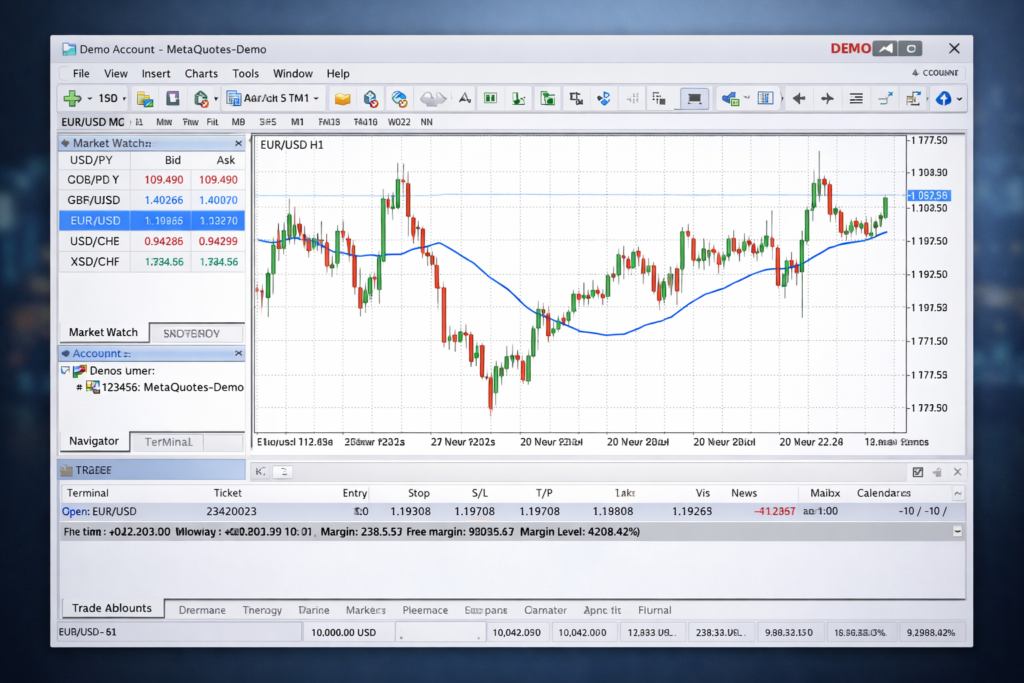
Step 7 : Master Risk Management
Effective risk management is the backbone of successful Forex trading. Without controlling your risks, even the most profitable strategies can fail. Here are three key principles to follow:
Never Risk More Than 2% Per Trade
One of the golden rules in trading is to limit your exposure on any single trade. Most professional traders recommend risking no more than 2% of your trading capital per trade. This means that if your account balance is $5,000, the maximum you should lose on a single trade is $100. Keeping risk low ensures that even a series of losing trades won’t significantly damage your account, allowing you to stay in the game longer and grow steadily.
Always Use Stop Loss
A stop loss is an automatic order that closes a trade when the price moves against you by a predetermined amount. Using a stop loss protects your capital from unexpected market movements and prevents emotional decision-making during volatile periods. Setting it strategically based on support/resistance levels or volatility ensures you cut losses early and protect profits.
Control Your Emotions
Trading can be highly emotional. Fear of losing or greed for profit can cause traders to make impulsive decisions, such as moving stop losses or over-leveraging. Controlling your emotions is crucial. Stick to your trading plan, follow your risk management rules, and treat losses as part of the learning process. A calm and disciplined mindset is what separates successful traders from beginners.
Mastering risk management isn’t just about protecting money—it’s about building consistency, confidence, and longevity in your Forex trading career. Always remember: the goal is to survive and thrive, not to win every trade.
4. How Long Does it Take to Learn Forex?
Learning Forex trading is a journey, not a one-time lesson. The time it takes to become proficient depends on several factors, including your dedication, learning method, and trading goals.
1. Understanding the Basics (1–3 Months)
The first step is to grasp fundamental concepts like currency pairs, pips, leverage, and spreads. During this period, most beginners focus on reading Forex charts, understanding market orders, and practicing on demo accounts. With consistent effort, you can gain a solid foundational understanding in 1 to 3 months.
2. Developing a Trading Strategy (3–6 Months)
Once you understand the basics, the next step is to develop and test a trading strategy. This includes learning technical indicators, chart patterns, and risk management rules. Using a demo account, traders experiment with strategies until they find one that fits their style. This stage can take 3 to 6 months, depending on how much time you dedicate to practice and learning.
3. Gaining Real Trading Experience (6–12 Months+)
The biggest learning curve comes from trading with real money. Emotions like fear and greed play a huge role in decision-making, and managing them takes time. Even after months of demo trading, many traders find real account trading challenging. Consistent practice, disciplined risk management, and journaling your trades are essential. For most people, it takes 6 months to a year—or more—of real trading experience to become consistently profitable.

Conclusion
Learning Forex is a gradual process that combines knowledge, practice, and experience. While the basics can be learned in a few months, becoming consistently profitable requires patience, discipline, and real trading experience. Every trader’s journey is unique, but by dedicating time to study, practicing strategies on a demo account, and gradually transitioning to a real account with strong risk management, anyone can build the skills needed to succeed in the Forex market. Remember, Forex trading is not about quick results—it’s about steady growth and continuous learning.
FAQs
1. Is Forex trading profitable?
Yes, Forex trading can be profitable, but it requires education, discipline, and proper risk management. Many beginners lose money initially because they trade without a strategy or emotional control.
2. How much money do I need to start Forex trading?
You can start with as little as $50 to $100 using a micro or mini account, but it’s recommended to start with enough capital to manage risk effectively.
3. What is the best time to trade Forex?
The Forex market is open 24 hours a day, 5 days a week. The best trading times are when major markets overlap, such as London/New York or Tokyo/London sessions, as volatility and liquidity are higher.