1. Introduction
What Are Futures Trading Platforms?
Futures trading platforms are online software or applications that allow traders to buy and sell futures contracts in financial markets. These platforms connect traders to exchanges and provide access to assets such as commodities, indices, and currencies. In simple terms, futures trading platforms give traders the tools to analyze price movements, execute trades, and manage positions efficiently.
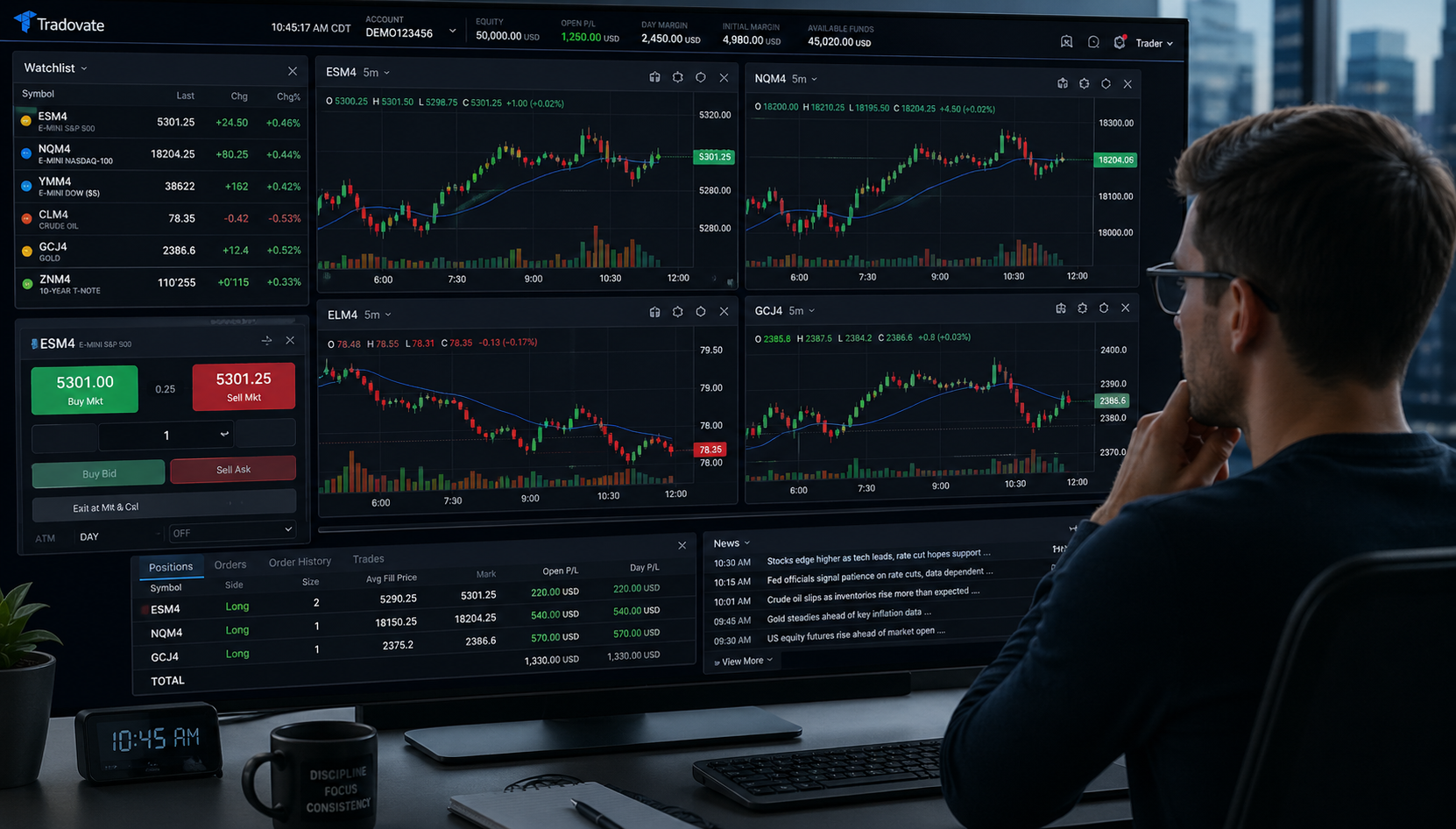
Most modern futures trading platforms include advanced features like charting tools, technical indicators, multiple order types, and risk management options. These features help traders make informed decisions and react quickly to market changes. Whether you are just starting or already experienced, using reliable futures trading platforms is essential for smooth and effective trading.
Why Choosing the Right Platform Matters
Choosing the right platform plays a major role in your trading success. Not all futures trading platforms offer the same level of performance, speed, fees, and user experience. A slow or unreliable platform can lead to execution delays and missed opportunities, while a high-quality platform can improve accuracy and efficiency.
Some futures trading platforms are beginner-friendly and offer simple interfaces along with educational tools. Others are designed for advanced traders and provide detailed analytics and customization features. Selecting the right one depends on your trading goals, experience level, and strategy.
Security is another important factor. Trusted platforms protect your funds and personal data, which allows you to trade with confidence. In fast-moving markets, even a small delay can affect your results. That is why choosing the best futures trading platforms is a key step toward long-term trading success.
2. What is a Futures Trading Platform?
Definition and How It Works
A futures trading platform is a digital system that allows traders to access futures markets and trade contracts based on the future price of an asset. These platforms provide everything a trader needs, including market data, price charts, order execution, and account management. In simple terms, futures trading platforms act as the workspace where traders analyze the market and place their trades.
When using futures trading platforms, a trader selects a futures contract, decides whether to buy or sell, and places an order. The platform then sends this order to the exchange, where it is matched with another trader. Once the trade is executed, the position appears in the trader’s account, and profits or losses change as market prices move.
These futures trading platforms also provide tools such as stop-loss orders and margin monitoring to help manage risk effectively.
Role of Brokers and Exchanges
Brokers and exchanges play a key role in how futures trading platforms function. A broker acts as the middleman between the trader and the exchange. When you place a trade on one of the futures trading platforms, your broker is responsible for sending that order to the appropriate exchange and ensuring it is executed properly. Brokers also provide trading accounts, handle margin requirements, and may offer customer support and educational resources.
Exchanges are the marketplaces where futures contracts are actually traded. They ensure transparency, liquidity, and fair pricing by matching buyers and sellers. Futures trading platforms connect directly to these exchanges so traders can access real-time prices and execute trades instantly. Without brokers and exchanges, futures trading platforms would not be able to function, as they rely on both to provide market access and trade execution.
3. Key Features to Look for in Futures Trading Platforms
Choosing the right platform requires understanding the features that can directly impact your trading performance. The best futures trading platforms offer a balance of usability, speed, and powerful tools to help traders make informed decisions.
User Interface and Ease of Use
A clean and simple interface is essential, especially for beginners. Futures trading platforms should be easy to navigate so you can quickly find charts, place trades, and monitor positions without confusion. A complicated layout can slow you down and increase the chances of making mistakes during fast market conditions.
Charting Tools and Indicators
Strong charting capabilities are a must for technical analysis. High-quality futures trading platforms provide multiple chart types, timeframes, and indicators such as moving averages, RSI, and MACD. These tools help traders analyze trends, identify entry and exit points, and make better trading decisions.
Execution Speed
Speed is critical in futures trading because markets can move very quickly. Reliable futures trading platforms ensure that your orders are executed instantly with minimal delay. Fast execution reduces slippage and helps you enter and exit trades at the desired price.
Risk Management Tools
Managing risk is one of the most important aspects of trading. Good futures trading platforms include features like stop-loss orders, take-profit levels, and margin alerts. These tools help protect your capital and control potential losses, especially in volatile market conditions.
Mobile Trading Support
In today’s fast-paced world, the ability to trade on the go is very important. Many futures trading platforms offer mobile apps that allow you to monitor the market, manage trades, and react quickly from your smartphone. This flexibility ensures that you never miss an opportunity, even when you are away from your computer.
4. Best Futures Trading Platforms in 2026
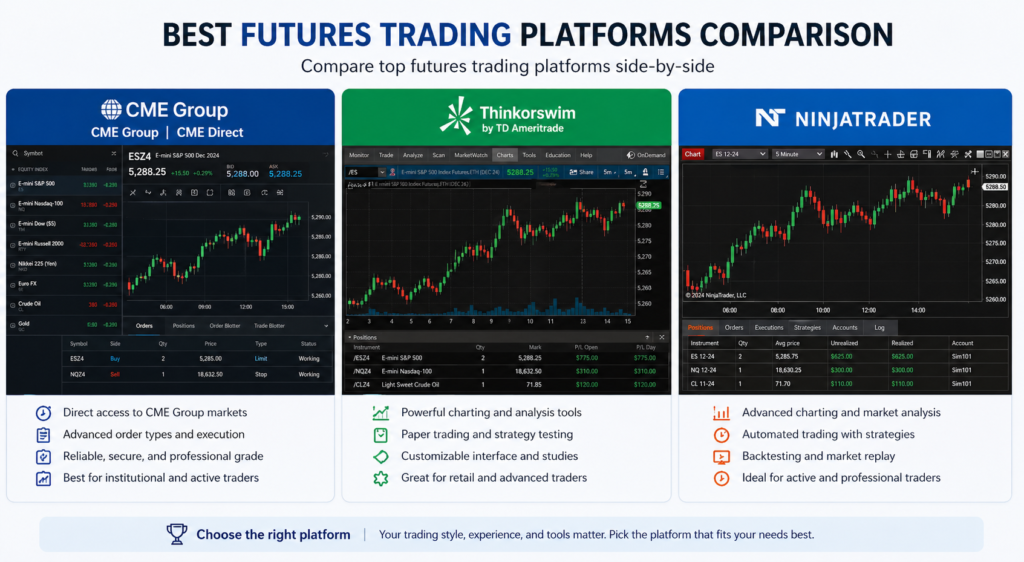
Choosing from the many available futures trading platforms can be challenging, especially with so many options offering different tools and features. Below are five of the best platforms in 2026, each suited for different types of traders.
Platform #1 Overview – Interactive Brokers
Interactive Brokers is widely considered one of the top choices for professional traders. It offers access to global futures markets, low commissions, and advanced trading tools through its Trader Workstation platform. This platform is ideal for experienced traders who need precision, speed, and deep market access. It consistently ranks among the best futures trading platforms due to its institutional-grade features and reliability.
Platform #2 Overview – TradeStation
TradeStation is known for its powerful analytics and customization options. It is designed for active traders who rely on technical analysis and automated strategies. With flexible margin options and strong backtesting tools, it stands out among futures trading platforms for traders who prefer data-driven decision-making.
Platform #3 Overview – NinjaTrader
NinjaTrader is a futures-focused platform that offers advanced charting, algorithmic trading, and professional-level tools. It is especially popular among dedicated futures traders because of its flexibility and low-cost structure. Many traders choose it as one of the most specialized futures trading platforms available today.
Platform #4 Overview – Charles Schwab (thinkorswim)
Charles Schwab provides futures trading through its thinkorswim platform. It combines powerful charting tools with high-quality research and market insights. This makes it a strong option for traders who want both analysis and execution in one place. Among futures trading platforms, it is well-known for its research-driven approach and educational support.
Platform #5 Overview – E*TRADE
E*TRADE offers a user-friendly experience, especially for beginners entering the futures market. Its Power E*TRADE platform provides intuitive tools, mobile trading support, and easy account management. It is often recommended as one of the most accessible futures trading platforms for new traders who want a simple yet effective trading environment.
5. Futures Trading Platforms for Beginners
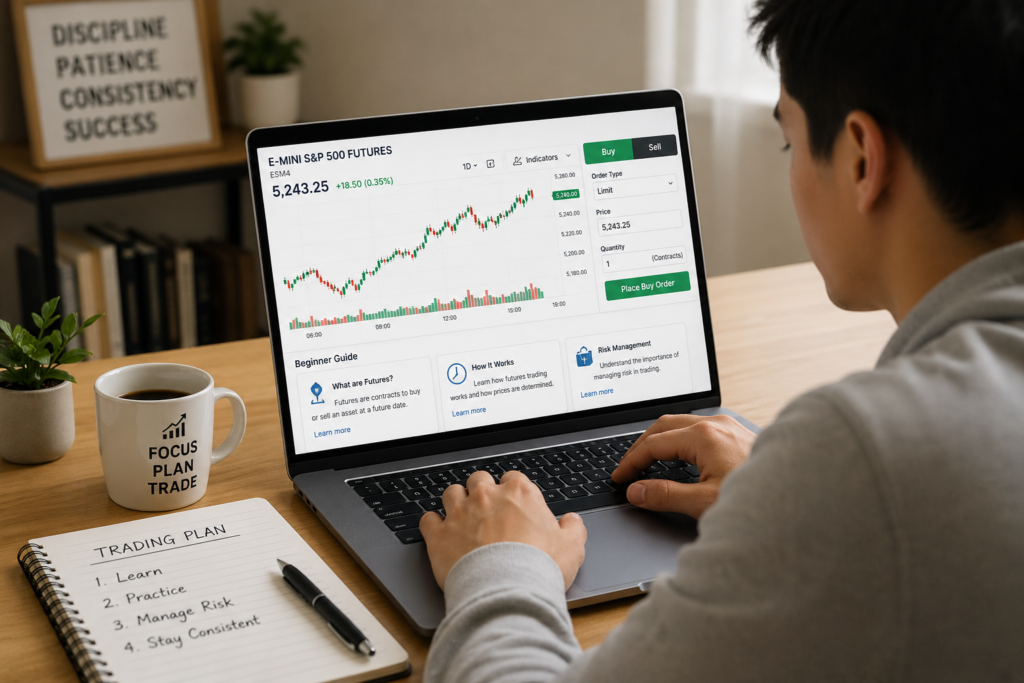
Starting in the futures market can feel overwhelming, but the right tools can make the process much easier. Beginner-friendly futures trading platforms are designed to simplify trading while helping new users learn and grow. These platforms focus on ease of use, education, and practice features.
Simple Interface Platforms
For beginners, a clean and easy-to-use interface is very important. The best futures trading platforms for new traders offer simple navigation, clear charts, and straightforward order placement. This helps reduce confusion and allows traders to focus on learning the basics instead of struggling with complex features. A simple platform builds confidence and makes the trading experience smoother.
Educational Resources
Learning is a key part of becoming a successful trader. Many futures trading platforms provide built-in educational resources such as tutorials, webinars, articles, and video lessons. These materials help beginners understand how futures markets work, how to analyze charts, and how to manage risk. Platforms that offer strong education give new traders a better chance of long-term success.
Demo Account Availability
One of the most valuable features for beginners is a demo account. Most beginner-friendly futures trading platforms offer simulated trading environments where users can practice without risking real money. This allows traders to test strategies, learn how orders work, and gain experience in real market conditions. Using demo accounts on futures trading platforms is an excellent way to build skills before moving to live trading.
Overall, choosing beginner-focused futures trading platforms can make a big difference in your learning journey. With the right combination of simplicity, education, and practice tools, new traders can develop confidence and improve their chances of success in the futures market.
6. Fees and Commissions Explained
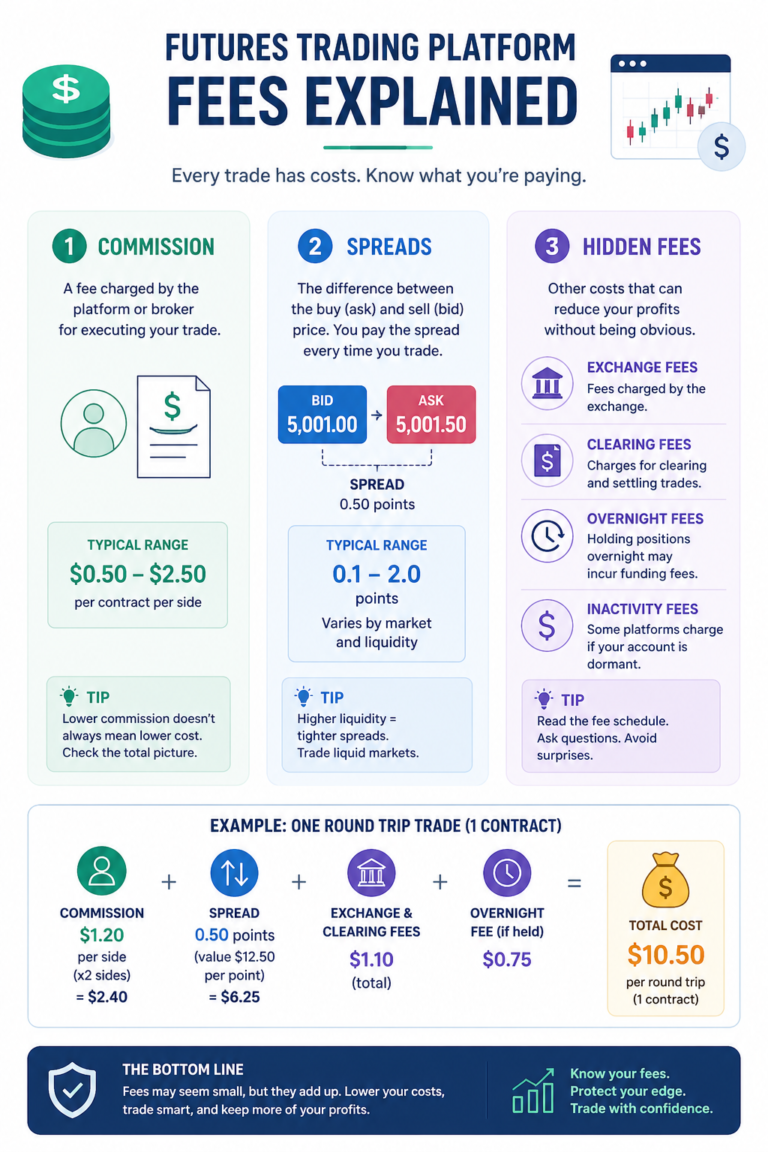
Understanding costs is essential because they directly affect your profitability. Even small fees can add up over time, especially if you trade frequently. Most futures trading platforms have different types of charges, and knowing them helps you choose the right platform and manage your expenses.
Trading Fees
Trading fees are the most common cost on futures trading platforms. These are usually charged per trade and may include commissions or exchange fees. Some platforms charge a fixed fee per contract, while others offer lower fees for high-volume traders. If you trade often, even a small commission can significantly impact your overall returns. That is why comparing trading fees across futures trading platforms is very important.
Spread and Hidden Costs
The spread is the difference between the buying price and the selling price of a futures contract. While futures markets typically have tight spreads, they still represent a cost to the trader. In addition to spreads, some futures trading platforms may include hidden costs such as data fees, inactivity fees, or platform subscription charges. These costs are not always obvious at first, so it is important to read the fee structure carefully.
Deposit and Withdrawal Charges
Another factor to consider is the cost of moving money in and out of your account. Some futures trading platforms charge fees for deposits or withdrawals, while others may offer free transactions depending on the payment method. Bank transfers, credit cards, or digital wallets can have different fee structures. Choosing futures trading platforms with low or no funding fees can help you save money in the long run.
7. How to Choose the Best Futures Trading Platform
Choosing the right platform is one of the most important decisions a trader can make. Different futures trading platforms are designed for different needs, so the best choice depends on your experience, budget, and trading style.
Based on Your Experience Level
Your experience level should guide your decision. Beginners should look for futures trading platforms that offer a simple interface, educational resources, and demo accounts. These features help you learn the basics without feeling overwhelmed.
Experienced traders, on the other hand, often need advanced tools such as custom indicators, algorithmic trading, and detailed analytics. Many professional futures trading platforms provide high-level features like real-time data, advanced order types, and deep market analysis tools. According to industry research, platforms with strong charting, research tools, and real-time data are essential for serious traders.
Based on Your Budget
Your budget is another key factor when choosing between futures trading platforms. Some platforms have low commissions and minimal account requirements, while others charge higher fees for premium features.
It is important to consider trading fees, margin requirements, and any hidden costs before making a decision. A platform with lower costs can help you keep more of your profits, especially if you trade frequently. Experts recommend comparing fees, margin policies, and overall cost structure when selecting futures trading platforms.
Based on Your Trading Style
Your trading style plays a major role in selecting the right platform. If you are a day trader or scalper, you need futures trading platforms that offer fast execution and reliable performance. Even small delays can affect your results in fast-moving markets.
If you are a swing trader or long-term trader, you may prioritize research tools, charting features, and ease of use over speed. Some traders also prefer platforms that support automation or strategy testing, depending on their approach.
In short, the best futures trading platforms are those that match your personal needs. By choosing based on your experience, budget, and trading style, you can improve your efficiency and increase your chances of long-term success.
8. FAQs
1. What is the best futures trading platform for beginners?
The best platform for beginners is one that offers a simple interface, educational resources, and a demo account. Many new traders prefer platforms that allow paper trading so they can practice without risking real money. Experts also recommend starting with demo accounts to gain experience before trading live
2. Are futures trading platforms safe?
Yes, futures trading platforms can be safe if you choose regulated and reputable brokers. Trusted platforms use strong security measures to protect your funds and personal data. It is important to avoid platforms that promise guaranteed profits or use high-pressure tactics, as these can be signs of scams.
3. How much money do I need to start?
The amount of money needed depends on the platform and the futures contract you want to trade. Some brokers allow you to start with a few hundred dollars, while others may require a higher margin. Since futures trading uses leverage, you only need a small percentage of the total contract value, but this also increases risk.
The best platform for beginners is one that offers a simple interface, educational resources, and a demo account. Many new traders prefer platforms that allow paper trading so they can practice without risking real money. Experts also recommend starting with demo accounts to gain experience before trading live
Yes, futures trading platforms can be safe if you choose regulated and reputable brokers. Trusted platforms use strong security measures to protect your funds and personal data. It is important to avoid platforms that promise guaranteed profits or use high-pressure tactics, as these can be signs of scams.
The amount of money needed depends on the platform and the futures contract you want to trade. Some brokers allow you to start with a few hundred dollars, while others may require a higher margin. Since futures trading uses leverage, you only need a small percentage of the total contract value, but this also increases risk.