Table of Contents
ToggleIntroduction
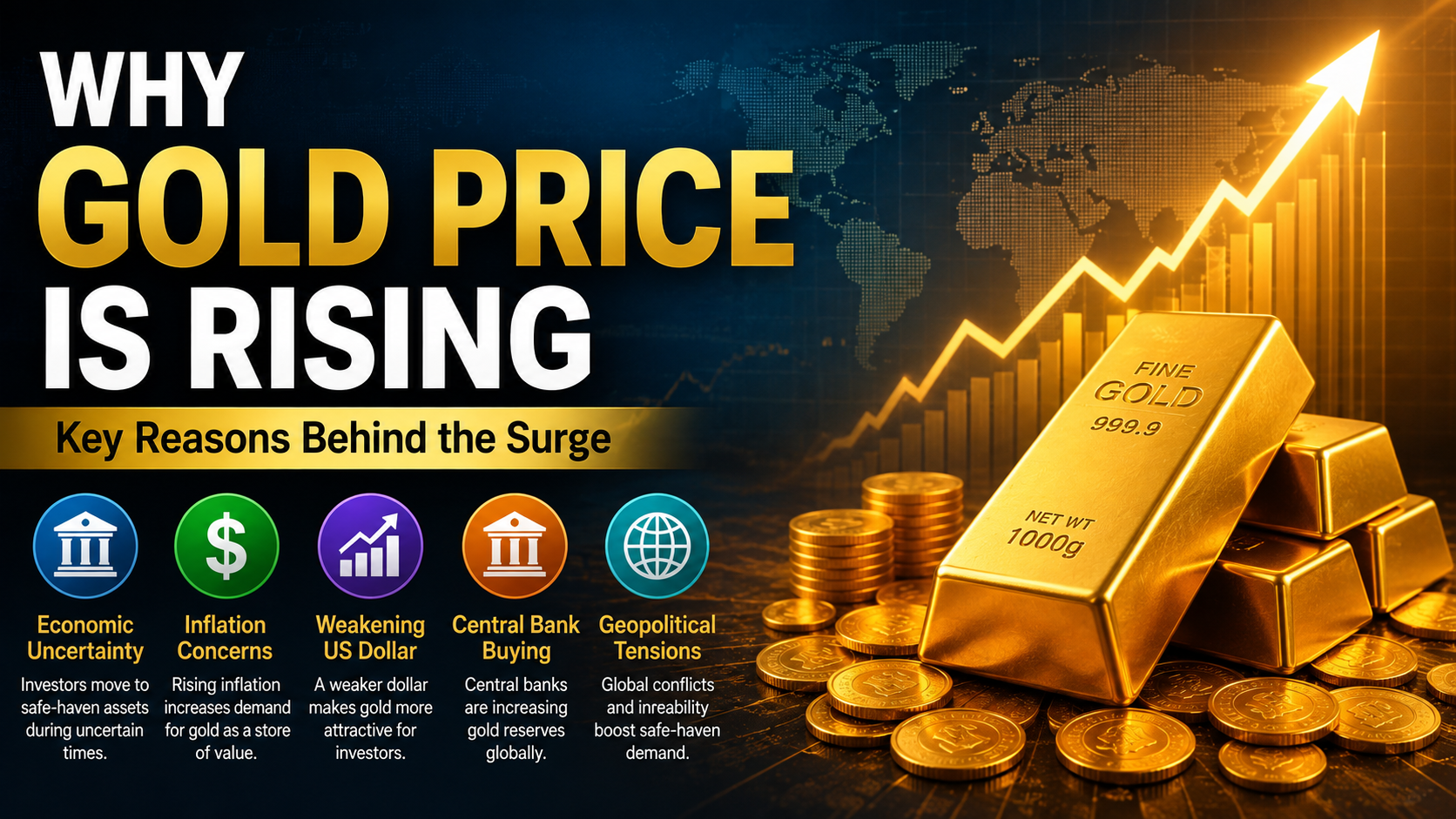
If you have opened the gold chart recently and wondered why is gold price rising, you are not alone. Gold has been attracting strong attention from traders and investors as its price continues to move higher, but the reason behind the rally is more complicated than simply saying that “investors are buying gold.”
Several forces can push gold higher at the same time. Expectations about Federal Reserve interest rates, movements in the US dollar, inflation, Treasury yields, geopolitical uncertainty, and investor demand can all influence the price of XAU/USD. Sometimes these factors reinforce each other, creating a stronger move in gold.
For traders, understanding why gold price is rising is just as important as watching the candlesticks on the chart. A strong rally can look attractive, but knowing what is driving the move can help you decide whether the momentum has fundamental support or could lose strength. In this guide, we will break down the key factors behind the current gold rally and explain what they could mean for gold traders.
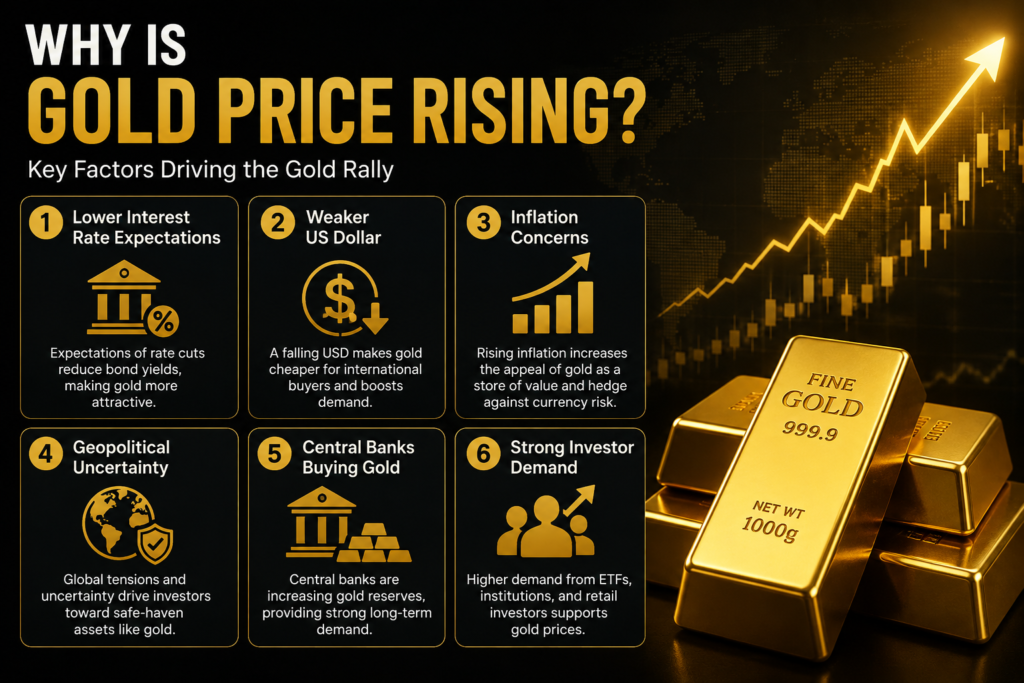
1. Expectations of Lower Interest Rates
One of the biggest factors behind a rising gold price is the expectation that interest rates could move lower. When traders start believing that the Federal Reserve may become less aggressive with monetary policy, financial markets often react before the actual rate decision takes place.
Gold does not pay interest or dividends, so it competes with assets such as US Treasury bonds. When interest rates and bond yields are high, holding gold can become less attractive because investors can earn a return from interest-bearing assets. When yields begin to fall, that disadvantage becomes smaller, which can increase demand for gold.
This is why Fed rate expectations are so important for XAU/USD traders. If economic data starts showing signs of slowing growth or weaker employment, markets may price in a more dovish Fed. That can put downward pressure on US yields and support gold prices.
However, it is important not to look at interest rates in isolation. Gold’s reaction also depends on what happens to inflation and the US dollar. The relationship between these factors is what often determines whether a move higher in gold has enough momentum to continue.
What Traders Should Watch
If you are trying to understand why is gold price rising, keep an eye on:
- Federal Reserve interest-rate expectations
- US Treasury yields
- US inflation data
- Employment reports
- Federal Reserve statements and speeches
- Economic growth data
When rate-cut expectations increase while US yields and the dollar weaken, the environment can become more supportive for gold.
2. A Weaker US Dollar Can Push Gold Higher
Another important reason behind a rising gold price is the movement of the US dollar. Gold is traded internationally in US dollars, so changes in the value of the dollar can have a noticeable impact on XAU/USD.
When the dollar weakens against other major currencies, gold becomes relatively cheaper for international buyers. This can encourage additional demand and create upward pressure on the price. On the other hand, a stronger dollar can make dollar-priced gold more expensive for overseas buyers and may put pressure on gold.
This is why many gold traders keep an eye on the US Dollar Index (DXY) alongside their XAU/USD chart. A falling DXY combined with bullish gold price action can provide useful confirmation that currency markets are supporting the move.
However, the relationship is not perfect. Gold can rise even when the dollar is strong if other factors, such as geopolitical risk or strong central-bank demand, are powerful enough to outweigh the currency effect.
What This Means for Gold Traders
If you are trying to understand why the gold price is rising, don’t analyze the gold chart by itself. Compare it with DXY and look for confirmation.
A simple relationship to remember is:
Weaker US dollar → potentially stronger gold
Stronger US dollar → potentially weaker gold
This does not mean every decline in the dollar will automatically send gold higher. Instead, it gives traders another piece of the puzzle when trying to understand the broader direction of XAU/USD.
3. Inflation and Its Impact on Gold Prices
Inflation is another major factor that can influence gold prices. When the cost of goods and services rises, investors often become more concerned about the future purchasing power of their money. Gold has historically been viewed as a store of value, so periods of economic uncertainty can increase interest in the precious metal.
However, the relationship between inflation and gold is not always straightforward. Higher inflation does not automatically mean that gold will rise. What matters is how inflation affects interest rates, real yields, and expectations about Federal Reserve policy.
For example, if inflation remains elevated but the Federal Reserve is expected to keep interest rates high, rising yields can limit gold’s upside. On the other hand, if inflation remains a concern while markets expect monetary policy to become less restrictive, gold can receive additional support.
Why Inflation Matters to Gold Traders
When analyzing why is gold price rising, traders should look beyond the headline inflation number. Important indicators include:
- Consumer Price Index (CPI)
- Producer Price Index (PPI)
- Core inflation
- Inflation expectations
- US Treasury yields
- Federal Reserve policy expectations
The key takeaway is simple: inflation can support gold, but the market’s reaction to inflation is often more important than the inflation number itself. This is why experienced gold traders watch inflation data together with the dollar and interest rates rather than relying on a single economic indicator.
4. Geopolitical Uncertainty Increases Safe-Haven Demand
Another important factor behind rising gold prices is geopolitical uncertainty. When investors face concerns about wars, political conflicts, trade tensions, or instability in financial markets, they often look for assets that can help protect their portfolios. Gold is one of the assets that has traditionally played this safe-haven role.
During periods of uncertainty, investors may become less comfortable holding riskier assets such as stocks or certain currencies. This can increase demand for gold and support its price.
Geopolitical events can also affect expectations about inflation, economic growth, and interest rates. For example, a major conflict can disrupt energy markets and global trade, potentially increasing inflation concerns while weakening economic growth. These changing expectations can influence gold from several directions at once.
Why Gold Traders Should Pay Attention
If you are trying to understand why is gold price rising, don’t focus only on economic indicators. Major geopolitical developments can trigger sudden moves in XAU/USD, particularly when markets are already nervous.
Traders should watch for:
- Military conflicts and escalating tensions
- Trade disputes between major economies
- Political instability
- Global economic uncertainty
- Major changes in energy prices
- News that could affect investor risk appetite
However, geopolitical news should not automatically be treated as a reason to buy gold. Price action still matters. Sometimes the market reacts strongly to breaking news and then quickly reverses once investors assess the actual economic impact.
For this reason, combining fundamental news with technical analysis can give gold traders a more balanced view of the market.
5. Central Banks Are Increasing Their Gold Holdings
Central-bank demand is another factor that can help explain why is gold price rising. Central banks around the world hold gold as part of their foreign-exchange reserves, and some have increased their gold holdings as they look to diversify their reserves.
Unlike short-term traders, central banks generally do not buy gold because they expect a quick price increase. Their decisions are often based on longer-term considerations such as reserve diversification, financial stability, and reducing dependence on a single currency.
When central banks continue purchasing significant amounts of gold, it can provide an additional source of demand in the global market. This can be particularly important when combined with investment demand from institutions and individual investors.
Why Central Bank Buying Matters
For gold traders, central-bank purchases are worth watching because they represent long-term demand rather than short-term speculative activity.
The broader relationship can be viewed like this:
Higher central-bank demand → stronger underlying gold demand → potential support for gold prices
However, central-bank buying is only one part of the gold market. Traders should still consider interest rates, Treasury yields, the US dollar, inflation expectations, and geopolitical developments before making a trading decision.
This long-term demand is also one reason why the current gold market cannot be explained simply by short-term price movements.
6. Strong Investor Demand Is Supporting Gold
Another reason why gold price is rising is increased demand from investors. When traders, institutions, and other market participants become more interested in gold, their combined buying activity can create additional upward pressure on prices.
Investor demand can come through several channels, including gold-backed exchange-traded funds (ETFs), futures markets, physical gold, and other investment products. When investors expect gold to perform well, they may increase their exposure, which can strengthen the existing bullish trend.
This is especially important when investor demand appears alongside other supportive factors. For example, if the US dollar is weakening, interest-rate expectations are becoming more dovish, and investors are simultaneously increasing their gold exposure, several bullish forces can work together.
How Investor Sentiment Affects Gold
Gold prices are influenced not only by economic data but also by market expectations. Traders often position themselves before an economic event actually happens.
For example:
Expectations of lower rates
↓
Investors become more interested in gold
↓
Buying pressure increases
↓
Gold price moves higher
But the opposite can also happen. If investors believe gold has risen too quickly, some may take profits. This can create short-term corrections even when the longer-term fundamentals remain supportive.
Therefore, when analyzing why is gold price rising, it is useful to consider both the fundamental reasons for the rally and the behavior of investors who are actually participating in the market.
7. Falling Real Yields Can Support Gold
Another important factor to understand when asking why is gold price rising is real yields. While many traders focus on the Federal Reserve’s interest-rate decisions, the actual return investors can earn after accounting for inflation can be just as important.
Real yield broadly refers to the return on an interest-bearing asset after adjusting for inflation. When real yields rise, assets such as Treasury securities can become more attractive compared with gold. When real yields fall, the opportunity cost of holding gold can decrease.
For example, imagine Treasury yields are offering a strong return while inflation expectations remain relatively low. Investors may prefer bonds because they can earn interest. But if yields decline while inflation expectations remain elevated, gold can become more appealing as a store of value.
Why Real Yields Matter for Gold Traders
Gold traders can monitor US Treasury yields and inflation expectations to get a better idea of the broader market environment.
A simplified relationship looks like this:
Falling real yields → lower opportunity cost of holding gold → potentially stronger gold demand
Rising real yields → higher opportunity cost → potentially weaker gold demand
This relationship is not perfect, and gold can move independently of real yields when other forces are strong. Nevertheless, real yields provide valuable context when analyzing the fundamental drivers behind XAU/USD.
For traders, combining real-yield movements with the US dollar, Federal Reserve expectations, and gold’s price structure can provide a much clearer picture of what is driving the market.
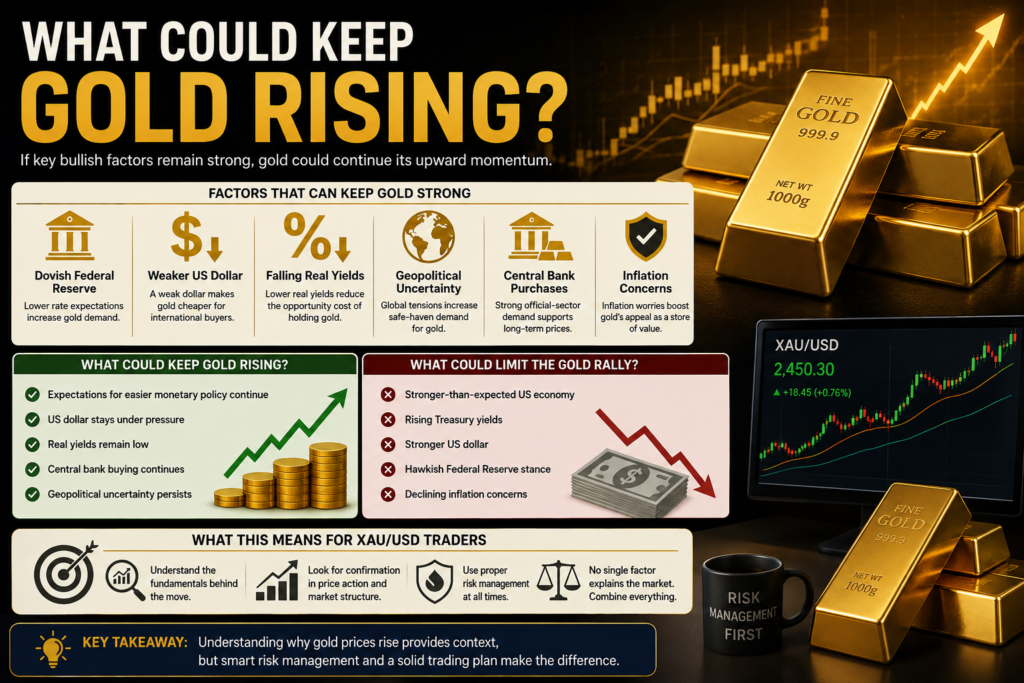
What Could Keep Gold Rising?
After looking at the major factors behind the recent gold rally, the next question is whether this upward momentum can continue. The answer depends on whether the forces supporting gold remain in place or begin to reverse.
Gold could remain strong if expectations for easier monetary policy continue, the US dollar stays under pressure, and real yields remain relatively low. Continued central-bank purchases and geopolitical uncertainty could also provide additional support for the precious metal.
However, gold does not move in a straight line. A stronger-than-expected US economy, rising Treasury yields, a stronger dollar, or a more hawkish Federal Reserve could create selling pressure and trigger a correction.
Key Signals Gold Traders Should Watch
If you want to understand where gold could move next, keep an eye on these factors:
- Federal Reserve policy: More dovish expectations can support gold.
- US dollar: Continued weakness can benefit XAU/USD.
- Treasury yields: Falling yields can reduce the opportunity cost of holding gold.
- Inflation data: Changes in inflation expectations can influence monetary-policy expectations.
- Geopolitical developments: Rising uncertainty can increase safe-haven demand.
- Central-bank purchases: Strong official-sector demand can provide longer-term support.
- Price action: Technical structure can help traders identify whether buyers or sellers currently have control.
The important point is that no single indicator can explain the entire gold market. The strongest analysis comes from looking at several factors together and then checking whether the price action confirms the fundamental picture.
What This Means for XAU/USD Traders
A rising gold price can create attractive trading opportunities, but chasing every bullish candle is not a strategy. Traders should first identify what is driving the move and then look for confirmation through market structure, support and resistance, volume, and momentum.
If the fundamental backdrop remains bullish while XAU/USD continues to form higher highs and higher lows, buyers may remain in control. If the fundamental drivers begin weakening and the technical structure breaks down, the rally could enter a correction.
Ultimately, understanding why is gold price rising gives traders more context, but it should be combined with proper risk management rather than used as a standalone buy signal.
Conclusion
The rise in gold prices is not happening because of one single reason. It is the result of several factors coming together at the same time. Investors are paying close attention to interest rates, the U.S. dollar, inflation, global uncertainty, and central-bank demand, all of which can influence the value of gold.
One important point is that gold often becomes more attractive when investors feel uncertain about the economy or financial markets. When confidence in currencies, bonds, or other investments becomes weaker, some investors move part of their money into gold as a way to protect their wealth.
Another factor traders should not ignore is market psychology. When gold breaks important resistance levels and continues making new highs, more traders and investors may enter the market because they do not want to miss the move. This can create additional buying pressure and make the rally stronger in the short term.
However, a rising gold price does not mean that gold will continue moving upward without a correction. If the U.S. dollar strengthens, interest-rate expectations change, Treasury yields rise, or investors start taking profits, gold can experience a sharp pullback.
For gold traders, the best approach is therefore not to ask only “Why is gold rising?” but also to understand what is driving the move and whether those conditions are likely to continue. Watching the dollar, Fed expectations, economic data, geopolitical developments and price action together can provide a much clearer picture.
In short, gold is rising because demand for the metal remains strong while investors continue to look for protection against economic and financial uncertainty. But as with any market, gold can move in both directions, so traders should combine fundamental analysis with proper risk management rather than chasing the price.
Frequently Asked Questions
1. Why is gold price rising?
Gold prices can rise when investors increase demand for gold because of economic uncertainty, inflation concerns, lower interest-rate expectations, a weaker U.S. dollar, geopolitical tensions, or strong central-bank purchases.
2. Why does gold rise when the dollar falls?
Gold is normally priced in U.S. dollars. When the dollar becomes weaker, gold can become relatively cheaper for buyers using other currencies. This can increase demand and provide support to the gold price.
3. Does inflation make gold more expensive?
Inflation can increase interest in gold because investors may use it as a way to protect purchasing power. However, inflation by itself does not determine gold prices. Interest rates, the dollar and investor demand also play important roles.
4. How do interest rates affect gold?
Gold does not pay interest like a savings account or bond. Therefore, when interest rates and bond yields are high, some investors may prefer interest-generating assets. When rates are expected to fall, gold can become relatively more attractive.