Table of Contents
ToggleIntroduction
Forex trading is the process of buying and selling currencies in the global financial market with the aim of making a profit. It operates 24 hours a day and is considered the largest and most liquid market in the world. Traders participate by exchanging currency pairs like EUR/USD or GBP/USD, taking advantage of price movements. If you want to enter this market, understanding how to open a forex account is the very first and most important step.
Millions of people open forex trading accounts every year because of the low entry barrier, high liquidity, and the ability to trade from anywhere in the world. With just a smartphone or laptop, anyone can start trading after learning how to open a forex account properly. The availability of leverage and flexible trading hours also attracts both beginners and experienced traders. However, success depends on knowledge, risk management, and choosing the right broker.
This guide is created to give you a clear and simple path to follow. It will explain everything from the basics of forex trading to the exact steps involved in how to open a forex account. You will learn how to select a reliable broker, complete the registration process, verify your identity, and prepare for your first trade. By the end, you will have a strong understanding of how to open a forex account and start your trading journey with confidence.
What Is a Forex Trading Account?
A forex trading account is a digital account that allows you to buy and sell currencies in the global forex market. It acts as your gateway to trading, where you can access price charts, execute trades, and manage your funds. When you learn how to open a forex account, you are essentially setting up your personal connection to the international currency market.
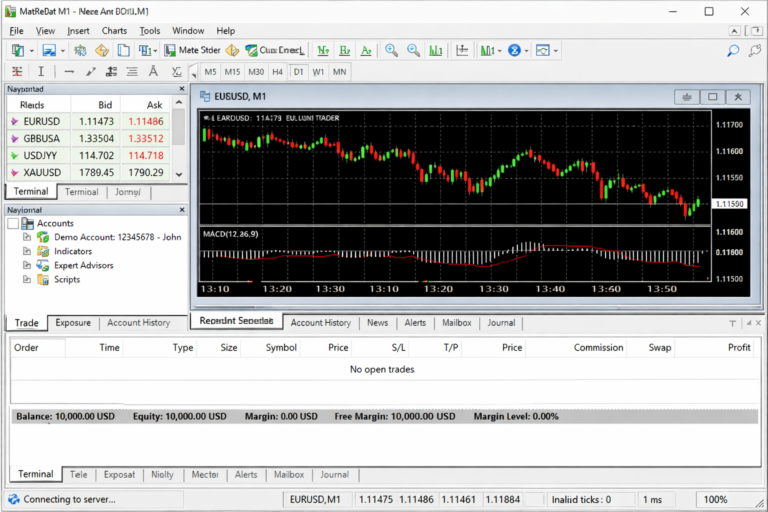
When you complete the process of opening a forex account, a broker provides you with login credentials for a trading platform such as MetaTrader. This platform is where all trading activities happen. You can view live currency prices, analyze charts, and place buy or sell orders. Without understanding how to open a forex account, it is not possible to start trading in a structured and secure way.
After your account is set up, you must complete the identity verification process. This step is part of the process of how to open a forex account and ensures safety and compliance with financial regulations. You typically upload documents like your ID card or passport and proof of address. After verification, your account becomes fully functional and ready for funding.
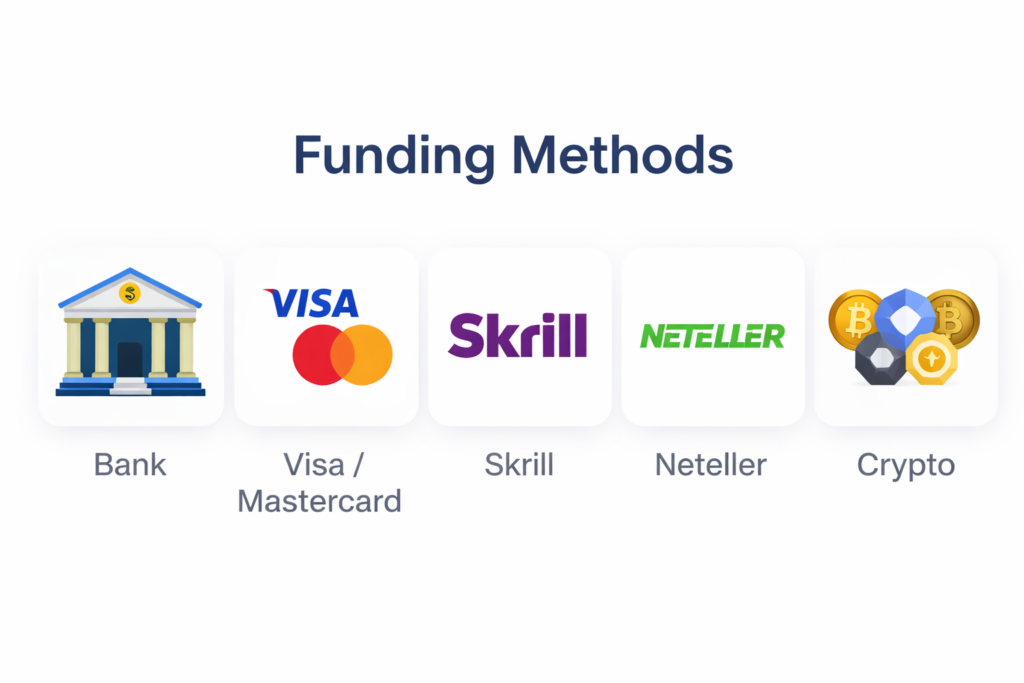
Funding your account is another important step in opening a forex account. You deposit money using methods such as bank transfer, debit card, or online payment systems. This money becomes your trading capital, which you use to open positions in different currency pairs. A proper understanding of how to open a forex account helps you choose the best deposit method and avoid unnecessary fees.
Types of Forex Accounts
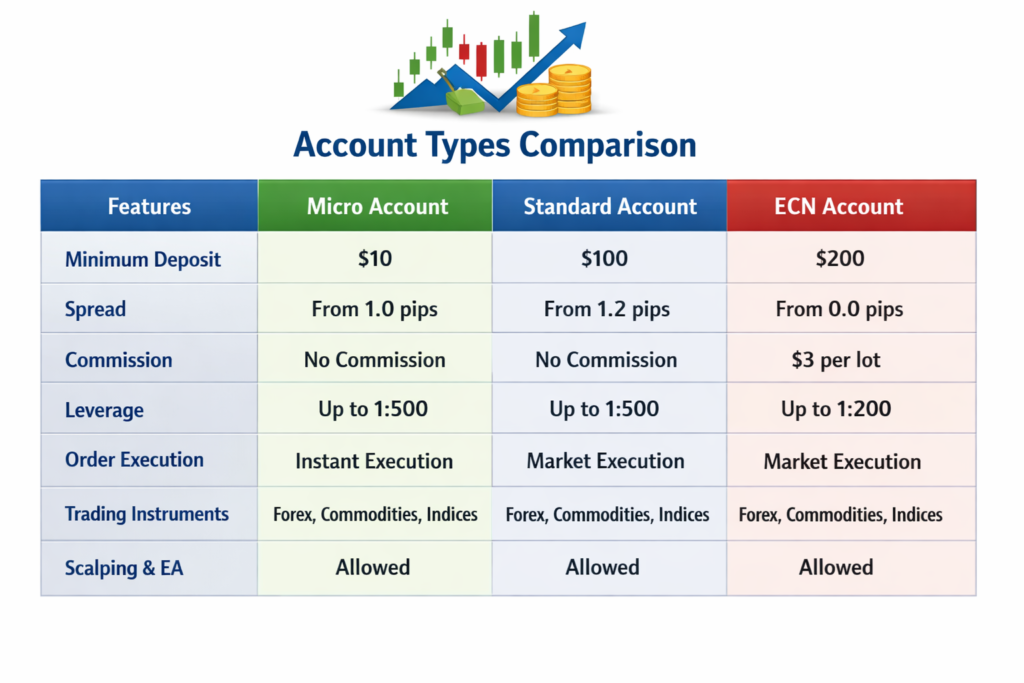
When learning how to open a forex account, understanding the different account types is very important. Each type is designed for a specific level of trader, whether you are a beginner or an experienced professional. Choosing the right account will directly impact your trading performance, risk exposure, and overall experience when starting how to open a forex account.
Standard, Micro, and Mini Accounts
- Standard Account
A standard account is best suited for experienced traders who have a larger amount of capital. It allows trading with standard lot sizes, which means higher potential profits but also higher risk. Traders who already understand how to open a forex account often prefer this option for full market exposure. - Micro Account
A micro account is perfect for beginners who want to start with very small investments. It allows trading with micro lot sizes, reducing risk significantly. If you are new and learning how to open a forex account, this account helps you gain real experience without risking too much money. - Mini Account
A mini account is a middle option between standard and micro accounts. It allows slightly larger trades than micro accounts but still keeps risk manageable. Many traders choose this after learning the basics of how to open a forex account and gaining some confidence.
ECN or STP Accounts
ECN and STP accounts are designed for advanced traders who want direct access to the forex market. These accounts connect you to liquidity providers, offering fast execution and tighter spreads. Traders who fully understand how to open a forex account often move to this type for a more professional trading environment.
Islamic (Swap-Free) Accounts
Islamic accounts are designed for traders who want to follow Shariah principles. These accounts do not include interest charges on overnight trades. For many traders, especially in Muslim regions, learning how to open a forex account includes selecting a swap-free option to stay compliant with their beliefs.
Demo Accounts
A demo account is the best starting point for beginners. It allows you to trade with virtual money in real market conditions. This helps you practice strategies and understand trading platforms before risking real funds. Many traders begin their journey of how to open a forex account with a demo account to build confidence.
How to Choose the Right Forex Broker
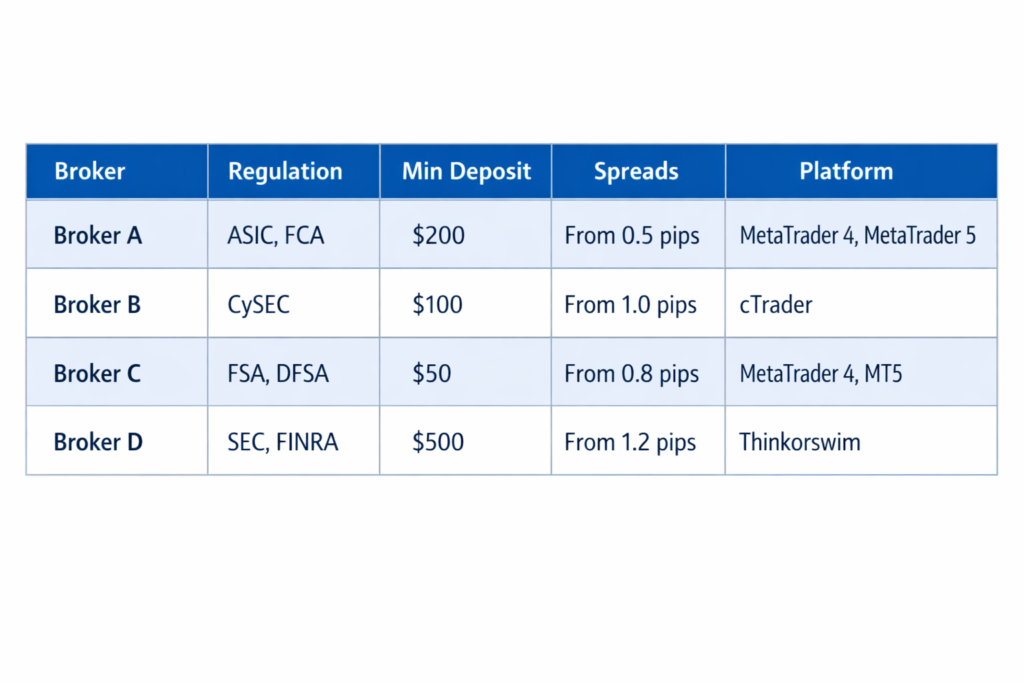
Choosing the right forex broker is one of the most important steps when learning how to open a forex account. A good broker ensures your funds are safe, your trades are executed fairly, and your overall trading experience is smooth. Making the wrong choice can lead to high costs, poor execution, or even risk to your capital.
Regulation and Safety
The first thing to check is whether the broker is regulated by a trusted authority. Well-known regulators include the Financial Conduct Authority, the Australian Securities and Investments Commission, and the Cyprus Securities and Exchange Commission. Regulation ensures that the broker follows strict financial rules and protects client funds.
When opening a forex account, always choose a licensed, transparent broker. This reduces the risk of fraud and gives you peace of mind while trading.
Spreads and Commissions
Spreads and commissions are the main trading costs you will pay. The spread is the difference between the buy and sell price, while some brokers also charge a commission per trade.
Lower spreads mean lower trading costs, especially if you trade frequently. As you learn how to open a forex account, compare different brokers to find the most cost-effective option. ECN accounts usually offer lower spreads but may include commissions.
Trading Platforms
A reliable trading platform is essential for smooth trading. Popular platforms include MetaTrader 4, MetaTrader 5, and cTrader. These platforms provide charting tools, technical indicators, and fast trade execution.
When choosing a broker during how to open a forex account, make sure their platform is easy to use, stable, and available on both desktop and mobile devices. A good platform improves your trading efficiency and decision-making.
Minimum Deposit Requirements
Different brokers have different minimum deposit requirements. Some allow you to start with as little as $10, while others may require $100 or more.
If you are a beginner learning how to open a forex account, it is better to start with a broker that offers a low minimum deposit. This allows you to begin trading with less financial pressure and gradually increase your investment.
Customer Support
Customer support is often overlooked but very important. A good broker should offer fast and helpful support through live chat, email, or phone.
When going through how to open a forex account, choose a broker that provides reliable customer service. This ensures that if you face any issues with deposits, withdrawals, or platform usage, you can get help quickly.
Step-by-Step — How to Open a Forex Account
If you want to start trading, understanding how to open a forex account step by step is essential. This process is simple, but each step plays a crucial role in ensuring your account is secure and ready for trading. Follow this complete guide to learn how to open a forex account the right way.
Step 1 — Choose a Regulated Broker
The first step in opening a forex account is selecting a trusted and regulated broker. Always choose a broker that is licensed by well-known authorities like FCA, ASIC, or CySEC. Regulation ensures your funds are protected and the broker operates under strict financial rules.
Take time to compare brokers based on reputation, reviews, trading conditions, and security. This step lays the foundation for your journey to safely open a forex account.
Step 2 — Select Your Account Type
After choosing a broker, the next step in how to open a forex account is selecting the right account type. Most brokers offer options like Standard, Micro, ECN, Islamic, and Demo accounts.
Beginners usually start with a Micro or Demo account, while experienced traders may choose Standard or ECN accounts. Choosing the right type will match your trading goals and risk level as you move forward with opening a forex account.
Step 3 — Fill in the Registration Form
Once you select your account type, you need to complete the registration form. This step in how to open a forex account requires basic personal information such as your name, email address, phone number, and country of residence.
Make sure all details are accurate because they will be used later for verification. The process is usually quick and takes only a few minutes to complete.
Step 4 — Complete KYC Verification
KYC stands for Know Your Customer, and it is a mandatory step in how to open a forex account. You will need to upload documents such as a government-issued ID and proof of address.
This step ensures your account is secure and complies with financial regulations. Once verified, your account becomes fully active, allowing you to deposit and withdraw funds without issues.
Step 5 — Fund Your Account
After verification, the next step in how to open a forex account is depositing money into your account. Most brokers offer multiple payment methods such as bank transfer, debit or credit cards, and online wallets.
Start with an amount you can afford to lose, especially if you are a beginner. Proper funding is important because it determines your trading capacity and risk management.
After verification, the next step in how to open a forex account is depositing money into your account. Most brokers offer multiple payment methods such as bank transfer, debit or credit cards, and online wallets.
Start with an amount you can afford to lose, especially if you are a beginner. Proper funding is important because it determines your trading capacity and risk management.
Step 6 — Start Trading or Practice on a Demo
The final step in how to open a forex account is to start trading. You can begin with a demo account to practice or move directly to live trading if you feel confident.
Use this stage to apply strategies, manage risk, and understand market movements. Even after learning how to open a forex account, continuous learning and practice are key to long-term success.
Documents You Need to Open a Forex Account
When learning how to open a forex account, you must prepare certain documents to complete the verification process. Brokers require these documents to comply with regulations and ensure your account is secure.
The most common document is a government-issued ID such as a passport, driver’s license, or national ID card. This proves your identity and is a mandatory part of opening a forex account.
You will also need proof of address. This can be a utility bill, bank statement, or official government correspondence showing your name and address. It ensures that your account is linked to your actual residence and is another key step in how to open a forex account.
Some brokers may also request proof of income, especially if you plan to use high leverage or trade large amounts. Documents like a payslip, bank statement, or tax record may be required. This helps the broker assess your trading capacity and risk profile while you complete how to open a forex account.
Having these documents ready before starting the registration process makes opening a forex account faster and smoother. Proper preparation ensures you can verify your account quickly and start trading without delays.
How Long Does It Take?
After submitting your KYC documents, the verification process usually takes 1–3 business days. This is the standard timeframe for most regulated brokers to review your government ID, proof of address, and any additional documents.
The exact time can vary depending on the broker and the completeness of your submission. If all documents are clear and valid, your account is often approved faster, allowing you to start trading sooner.
Understanding this timeline is important when learning how to open a forex account, as it helps you plan your first deposit and trading strategy without unnecessary delays.
FAQs
1. Can I open a forex account with $10?
Yes, some brokers allow you to start trading with as little as $10. Micro and mini accounts are perfect for beginners who want to start small while learning the market. Always check the broker’s minimum deposit requirement when learning how to open a forex account.
2. Is forex trading legal in Pakistan?
Yes, forex trading is legal in Pakistan if you use brokers that are regulated internationally. However, local regulations require you to follow legal and tax guidelines. Learning how to open a forex account with a regulated broker ensures your trading stays compliant.
3. What is the best broker for beginners?
The best broker for beginners is one that is regulated, has low minimum deposits, offers a demo account, and provides a user-friendly platform like MT4 or MT5. Features such as educational resources and responsive customer support also help new traders while learning how to open a forex account.
4. What information do I need to open a forex account?
You typically need to provide your full name, date of birth, contact details, country of residence, and sometimes financial information to help the broker verify your identity and understand your trading experience.
5. Why do brokers ask for financial information?
Brokers may require financial details such as income or trading history to comply with anti‑money‑laundering rules and to ensure they understand your financial situation before approving your account.
Conclusion
Opening a forex account is the first and most important step in your trading journey. By choosing a regulated broker, selecting the right account type, completing verification, and funding your account, you set a strong foundation for success. Understanding how to open a forex account ensures you trade safely, manage risk effectively, and take full advantage of the global forex market.
Whether you start with a demo account to practice or a micro account to trade small, each step brings you closer to becoming a confident trader. Proper preparation, research, and learning are key to achieving long-term results.