Table of Contents
ToggleIntroduction
Every day, thousands of traders open a gold chart hoping to catch the next big move. Most of them lose money because they enter at the wrong time or trade without a clear plan. A reliable Gold Day Trading Strategy can make the difference between guessing and making informed trading decisions.
I wasn’t always a disciplined trader. I spent months testing different indicators and copying strategies, but my results stayed inconsistent. Everything changed when I stopped chasing signals and started following a simple trading routine.
In this article, I’ll share the Gold Day Trading Strategy that has helped me become more patient and consistent in the XAU/USD market. You’ll learn how I prepare before every trade, what I look for on the chart, and the rules I follow to manage risk. By the end, you’ll have a strategy you can practice and adapt to your own trading style.
Why Most Gold Day Trading Strategies Fail
Many traders believe they need a complicated Gold Day Trading Strategy to make consistent profits. They fill their charts with indicators, take trades based on emotions, and expect every setup to work. The result is usually the same, inconsistent performance and unnecessary losses.
The biggest mistake isn’t choosing the wrong indicator. It’s trading without a clear process that tells you when to enter, when to stay out, and how much to risk on every trade. A successful Gold Day Trading Strategy is built on discipline, patience, and risk management rather than predictions.
Another reason traders struggle is that they ignore market conditions. Gold behaves differently during the Asian, London, and New York sessions, and each session creates unique trading opportunities. Learning how to day trade gold starts with understanding when the market is most active.
Many beginners also believe they need to trade every price movement. Professional traders know that waiting is part of the job, and they often skip more trades than they take. This mindset is one of the biggest differences between a profitable trader and someone who is constantly chasing the market.
If you’re looking for the best Gold Day Trading Strategy, don’t focus on finding a secret indicator. Focus on building a repeatable routine that helps you make better decisions every trading day. That is the approach we’ll build throughout this guide.
Understanding How the Gold Market Moves
Gold doesn’t move randomly, and every Gold Day Trading Strategy should begin with understanding what drives price action. Global economic events, central bank decisions, inflation data, and the strength of the US Dollar all influence the direction of gold prices. Knowing these factors helps traders avoid entering the market blindly.
One of the strongest relationships in the market is between gold and the US Dollar. When the dollar weakens, gold often becomes more attractive to investors, while a stronger dollar can put pressure on gold prices. Learning this relationship is a key step in how to day trade gold with greater confidence.
Interest rates also play an important role in gold price movements. When central banks raise rates, investors may shift toward interest-bearing assets, while lower rates often increase demand for gold as a safe-haven investment. Every successful Gold Day Trading Strategy considers upcoming interest rate announcements before opening trades.
Economic reports such as Non-Farm Payrolls (NFP), Consumer Price Index (CPI), and Federal Reserve decisions frequently create sharp movements in gold. These events can produce excellent trading opportunities, but they also increase volatility and risk within minutes. Traders using the best Gold Day Trading Strategy prepare for these events instead of reacting after the market has already moved.
The 3L Gold Trading Framework (Liquidity → Location → Logic)
Most traders start by looking for an entry signal. I do the opposite. Before I even think about entering a trade, I make sure the market passes three filters that I call the 3L Gold Trading Framework: Liquidity, Location, and Logic. If one of these filters is missing, I simply don’t trade.
Step 1 – Liquidity: Where Is the Market Hunting Orders?
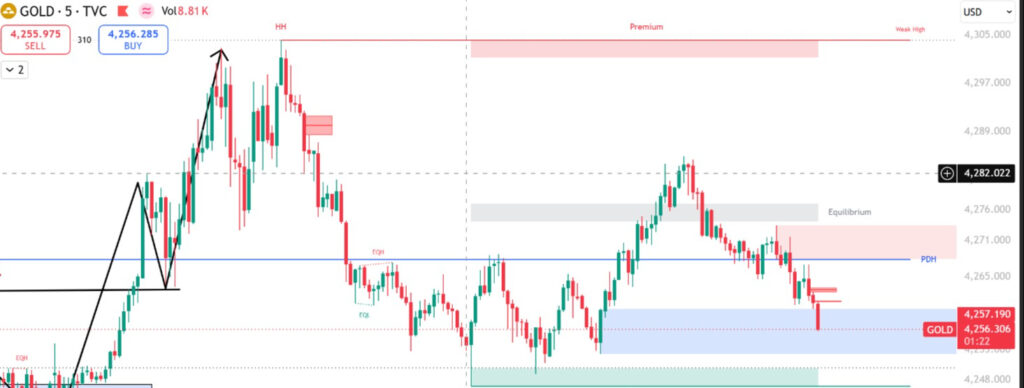
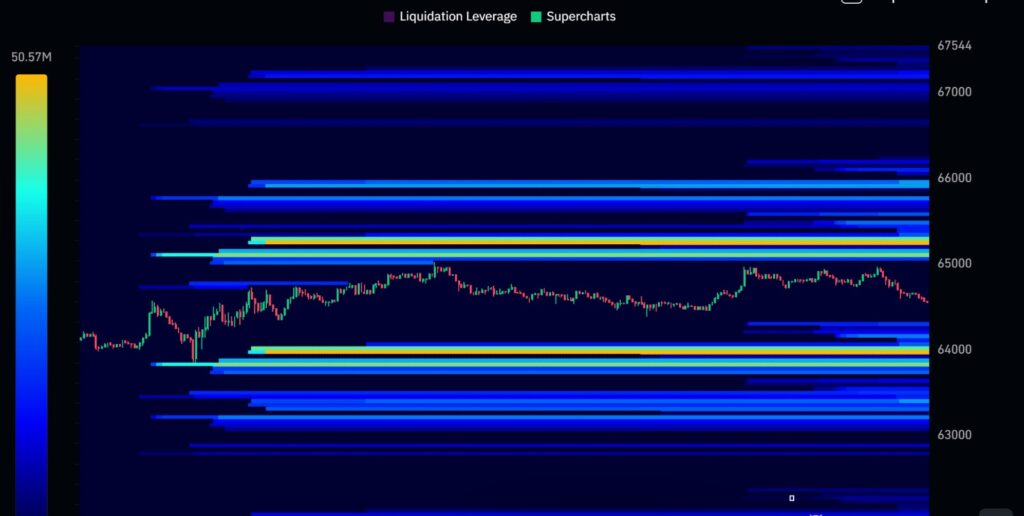
My first question every morning isn’t whether gold will go up or down. I want to know where most traders have placed their stop losses because that is where liquidity usually exists. Recent highs, recent lows, equal highs, and equal lows become my areas of interest, not because I expect an immediate reversal, but because I expect the market to react once those orders are triggered.
Step 2 – Location: Is Price at a Premium or Discount?
After identifying liquidity, I ask whether the current price makes sense for buying or selling. I avoid buying after a strong rally and avoid selling after a sharp decline because I don’t want to chase momentum. Instead, I look for areas where price is relatively low in an uptrend or expensive in a downtrend, allowing me to trade with a better risk-to-reward ratio.
Step 3 – Let the Market Tell the Story
I never assume that gold will reverse just because it reaches support or resistance. Instead, I wait for the market to confirm the direction through a structural break, a strong rejection candle, or a clear shift in momentum. This confirmation keeps my Gold Day Trading Strategy grounded in evidence rather than emotion.
Step 4 – Trade Only During High-Liquidity Sessions
Timing is just as important as finding the right setup. I prefer trading during the London session and the London–New York overlap because this is when gold usually produces cleaner trends and stronger momentum. Anyone learning how to day trade gold should understand that the best setups often appear when institutional traders are most active.
Step 5 – Build Every Trade Around Risk
Before entering any position, I define my entry, stop-loss, and profit target. I only take trades that offer at least a 1:2 risk-to-reward ratio because protecting capital is more important than chasing every opportunity. This rule has remained one of the most valuable parts of my Gold Price Action Strategy.
Step 6 – Ignore Average Setups
One lesson I learned early is that not every setup deserves a trade. If liquidity, market structure, session timing, and price action do not align, I simply wait for a better opportunity instead of forcing an entry. That patience is one of the biggest reasons this Gold Day Trading Strategy produces higher-quality trades.
Step 7 – Review Every Trading Session
After the market closes, I review every completed trade with fresh eyes. I save chart screenshots, document my reasoning, and identify mistakes that can be avoided in future sessions. This daily review process continues to improve my Gold Trading Tips and helps me refine the strategy over time.
Gold Day Trading Strategy Checklist
Before I place a single trade, I follow the same routine every day. This checklist keeps me focused, removes emotional decisions, and makes sure every setup meets my trading rules. If even one step is missing, I wait for a better opportunity because patience is often the difference between a good trade and a costly mistake.
| Step | What I Check | Why It Matters |
|---|---|---|
| 1. Check the Overall Trend | I start with the 4-hour and 1-hour charts to see whether gold is trending up, down, or moving sideways. | Trading with the trend gives me a better chance of finding high-probability setups. |
| 2. Mark Key Price Levels | I draw the strongest support and resistance levels where price has reacted in the past. | These zones often become decision points where buyers and sellers return to the market. |
| 3. Find Liquidity Areas | I highlight recent highs, lows, and equal highs or lows where stop losses are likely to be resting. | Gold frequently moves into these areas before making its next major move. |
| 4. Wait for Price Confirmation | I let the market confirm my idea through a rejection candle, market structure shift, or momentum change. | Confirmation helps me avoid entering trades based on hope or emotion. |
| 5. Trade During Active Sessions | I focus mainly on the London session and the London and New York overlap. | Higher trading volume usually creates cleaner price movements and better opportunities. |
| 6. Plan My Risk | I decide my entry, stop loss, take profit, and position size before placing the trade. | Every trade should have a clear plan instead of making decisions after entering the market. |
| 7. Review the Setup One More Time | I quickly go through my checklist to make sure nothing has been missed. | This final review helps me stay disciplined and avoid impulsive trades. |
| 8. Record the Trade | After the trade is complete, I save screenshots and write down what I learned. | Every trade becomes valuable feedback that helps improve my Gold Day Trading Strategy over time. |
Entry Confirmation Rules for My Gold Day Trading Strategy
Finding a good setup is only half of the job. The real difference between profitable traders and beginners is knowing when to stay out of the market. In my Gold Day Trading Strategy, I never enter a trade just because price reaches a support or resistance level because I want the market to prove that my trading idea is valid.
Rule 1: Wait for a Clear Rejection
The first thing I look for is a strong rejection from a key price level. This tells me that buyers or sellers are actively defending that area instead of allowing price to move straight through it. A clean rejection gives me more confidence that the market is preparing for a meaningful move rather than creating another false breakout.
Rule 2: Confirm the Shift in Market Structure
A rejection alone is not enough for me to enter a trade. I wait for the market to break its recent structure because this often signals that momentum is changing. This simple confirmation helps my Gold Day Trading Strategy avoid many low-probability setups that look attractive but fail within minutes.
Rule 3: Let the Candle Close First
One mistake I made early in my trading journey was entering trades before the candle had finished forming. A candle can look bullish or bearish halfway through, only to close in the opposite direction a few minutes later. Waiting for the candle to close gives me more reliable information and keeps emotional decisions out of my trading.
Rule 4: Check Whether Volume Supports the Move
A strong price movement becomes much more meaningful when it is backed by increased trading activity. If price breaks an important level with very little momentum, I become cautious because weak moves often reverse quickly. I always want to see that the market has enough participation to support the direction of the trade.
Rule 5: Make Sure Multiple Factors Align
I never rely on a single confirmation signal. The best trades usually happen when market structure, liquidity, support and resistance, session timing, and price action all point in the same direction. This is one of the most important principles behind my Gold Day Trading Strategy, and it has helped me avoid many unnecessary losses.
Rule 6: Accept That Missing a Trade Is Better Than Forcing One
Not every market movement deserves your attention. If one of my confirmation rules is missing, I simply let the opportunity go and wait for the next setup because another trade will always come. Protecting capital is more important than satisfying the urge to always be in the market.
My Daily Gold Trading Routine
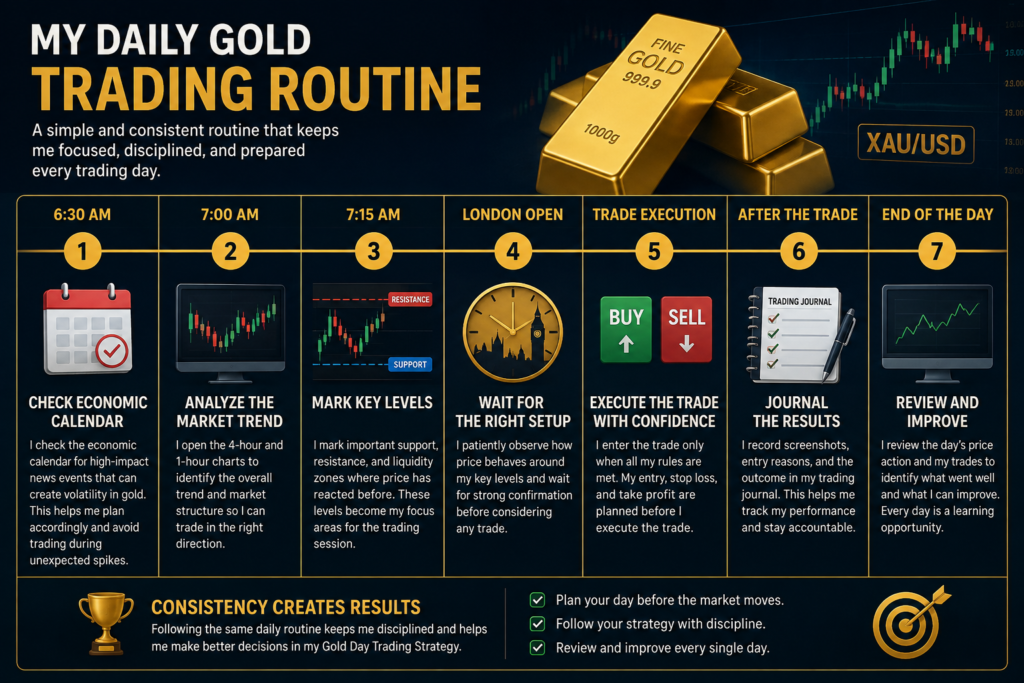
A successful Gold Day Trading Strategy is not just about finding the perfect entry. It is about following the same routine every day so emotions never control your decisions. This daily process keeps me focused, organized, and ready for the opportunities that matter most.
| Time | What I Do | Why It Matters |
|---|---|---|
| 6:30 AM | Check the economic calendar for high-impact news events. | Knowing what is scheduled helps me avoid unexpected market volatility and prepare for important trading opportunities. |
| 7:00 AM | Open the 4-hour and 1-hour charts to identify the overall market trend. | Trading with the higher timeframe trend gives me a stronger foundation before looking for entries. |
| 7:15 AM | Mark the key support, resistance, and liquidity zones on the chart. | These levels become my areas of interest throughout the trading session instead of chasing random price movements. |
| London Open | Watch how price reacts around my marked levels and wait for confirmation. | I never force a trade because patience often produces better opportunities than acting too early. |
| Trade Execution | Enter the trade only if every rule in my strategy is confirmed. | Every position follows the same process, making my decisions consistent rather than emotional. |
| After the Trade | Record screenshots, entry reasons, and the final result in my trading journal. | Reviewing each trade helps me understand what worked well and what needs improvement. |
| End of the Day | Review the entire trading session and compare it with my original plan. | This habit allows me to improve my Gold Day Trading Strategy one trading day at a time instead of repeating the same mistakes. |
Why I Never Skip My Morning Preparation
Many traders open their charts and immediately search for a trade. I take a different approach because I believe preparation creates confidence before the market even starts moving. Spending a few extra minutes planning my day helps me avoid rushed decisions later.
I Let the Market Come to Me
Once my chart is prepared, my job is simply to wait. I do not chase candles or jump into trades because I am afraid of missing an opportunity. Following this routine has taught me that the best setups usually reward traders who are willing to be patient.
Every Trading Day Ends With a Lesson
Whether I finish the day with a profit or a loss, I always review my decisions. The goal is not to be right every time but to become a little better with every trading session. That mindset has improved my Gold Day Trading Strategy far more than searching for another indicator ever could.
This routine may seem simple, but consistency is what turns a trading plan into a repeatable process. In the next section, I’ll share the most common mistakes that prevent traders from becoming consistently profitable and explain how you can avoid them from the very beginning.
Final Thoughts
A successful Gold Day Trading Strategy is not built on predicting every market move. It is built on following a repeatable process, managing risk with discipline, and waiting for high-quality opportunities instead of chasing every price swing. The traders who stay consistent are usually the ones who understand that patience is just as valuable as finding the right entry.
Throughout this guide, I have shared the same approach that shapes every trading decision I make, from analyzing the higher timeframe trend to confirming entries and reviewing every completed trade. Each step has a purpose, and together they create a structured routine that removes emotional decision-making. If you focus on mastering this process rather than searching for shortcuts, your confidence and consistency will improve over time.
No Gold Day Trading Strategy can guarantee a winning trade every time because the market is always changing. What you can control is how well you prepare, how much you risk, and whether you follow your trading plan without hesitation. Those habits will have a much greater impact on your long-term results than trying to predict every move in the gold market.
Your next step is simple. Open a gold chart, apply the strategy one step at a time, and practice identifying high-probability setups before risking real money. The more you repeat the process, the more naturally you will begin to read the market and make confident trading decisions.
Frequently Asked Questions
1. What is the best Gold Day Trading Strategy for beginners?
The best Gold Day Trading Strategy is one that is simple, easy to follow, and based on clear trading rules. Beginners should focus on market structure, support and resistance, liquidity, and proper risk management instead of relying on multiple indicators. Mastering one proven strategy is far more effective than switching between different methods.
2. What is the best timeframe for day trading gold?
Many day traders analyze the 4-hour and 1-hour charts to identify the overall trend before looking for entries on the 15-minute or 5-minute chart. This approach provides a clear market direction while helping traders find precise entry points. Using multiple timeframes can improve the quality of trading decisions.
3. How many gold trades should I take in one day?
There is no fixed number of trades you should take each day. Most experienced traders wait for one or two high-quality setups instead of trading every market movement. Focusing on quality rather than quantity often leads to better long-term results.
4. Can I use this Gold Day Trading Strategy for XAU/USD?
Yes. This strategy is designed specifically for XAU/USD and can be applied on popular trading platforms such as MetaTrader 4, MetaTrader 5, and TradingView. The same principles of trend analysis, liquidity, and confirmation remain effective regardless of the platform you use.
5. Does this strategy work during major news events?
Major events such as Non-Farm Payrolls (NFP), Consumer Price Index (CPI), and Federal Reserve announcements can create significant volatility in the gold market. Many traders prefer to wait until the initial price reaction settles before looking for confirmation. Trading after the market reveals its direction can help reduce unnecessary risk.