Introduction
Gold is one of the most traded and valuable assets in the world. Its price changes every day due to economic conditions, market sentiment, and global events. Understanding the factors that affect gold prices helps traders and investors make better decisions and reduce unnecessary risks.
Knowing the factors that affect gold prices is essential whether you are trading gold or investing for the long term. Gold reacts differently from stocks and currencies because it is considered a safe-haven asset during uncertain times.
Global economic events have a major impact on gold prices. Inflation, interest rate decisions, geopolitical tensions, and changes in the U.S. dollar can all cause gold prices to rise or fall. These are some of the most important ,
By learning the factors that affect gold prices, you can better understand market trends and identify potential trading opportunities. This knowledge allows you to make informed decisions instead of relying on guesswork.
In this guide, we will explain the top factors that affect gold prices and how each one influences the gold market. Understanding these factors that affect gold prices will help you trade with greater confidence and improve your overall market analysis.
1. How Gold Prices Are Determined
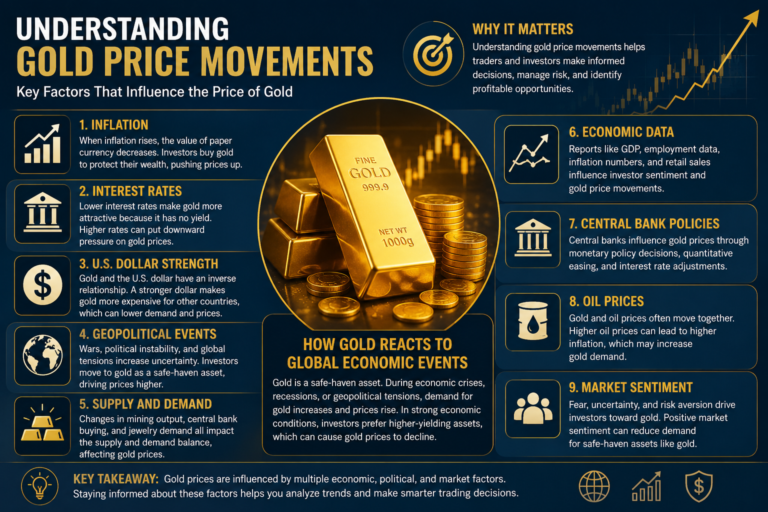
Gold prices are determined by several economic and market forces that influence buying and selling activity around the world. Understanding these drivers is essential because they are among the most important factors that affect gold prices. From supply and demand to central bank policies, every factor plays a role in the daily movement of gold prices.
Supply and Demand
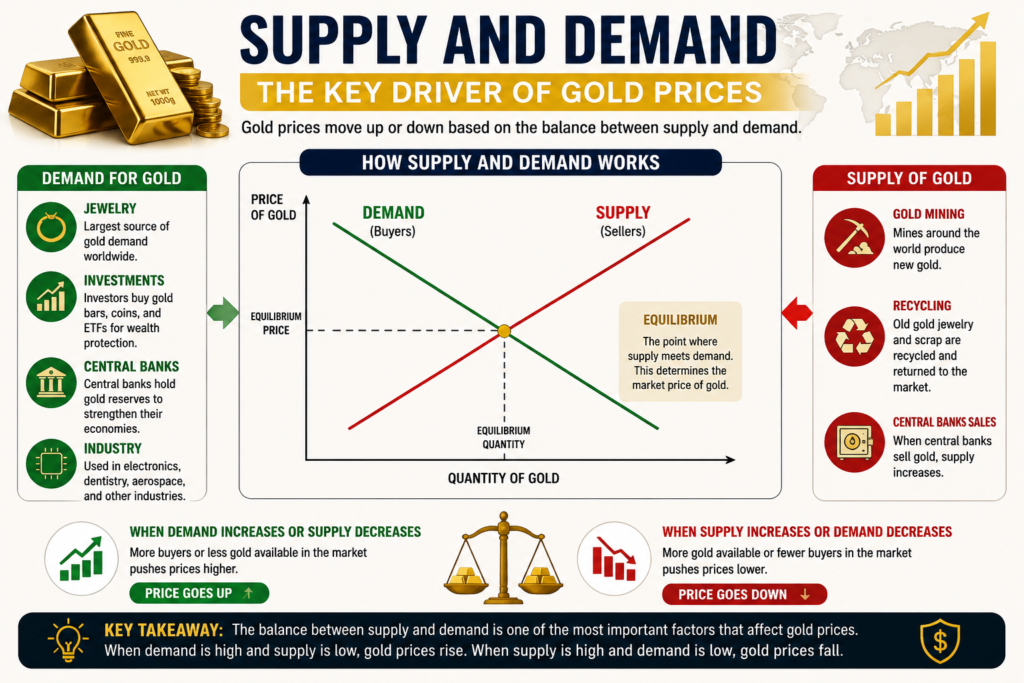
The balance between supply and demand is one of the biggest factors that affect gold prices.
When demand for gold increases while supply remains limited, prices usually rise. On the other hand, if gold production increases or demand falls, prices often decline. Demand comes from jewelry manufacturers, investors, central banks, and industries that use gold in electronics and technology.
Global Trading Markets
Gold is traded around the clock in major financial markets such as London, New York, Shanghai, and Tokyo. Because these markets operate across different time zones, gold prices constantly change based on buying and selling activity. Global market participation is one of the key factors that affect gold prices every day.
Spot Gold Price
The spot gold price is the current market price at which gold can be bought or sold for immediate delivery. It is considered the benchmark price used by traders, investors, and dealers worldwide. The spot price changes every second as market conditions and investor sentiment shift.
Futures Market
Gold futures are contracts that allow traders to buy or sell gold at a predetermined price on a future date. These contracts help investors hedge risk and speculate on future price movements. Heavy trading in the futures market can significantly influence short-term gold prices, making it one of the important factors that affect gold prices.
Central Banks
Central banks hold large gold reserves as part of their financial assets. When they buy gold, demand increases and prices often rise. When they sell large amounts, prices may fall. Their monetary policies, including interest rate decisions, also influence investor demand for gold.
Why Gold Is Considered a Safe-Haven Asset
Gold is known as a safe-haven asset because investors turn to it during periods of economic uncertainty, inflation, geopolitical tensions, or financial crises. When stock markets become volatile, many investors move their money into gold to preserve wealth. This increased demand is one of the strongest factors that affect gold prices, often pushing prices higher during uncertain times.
By understanding how supply and demand, global markets, the spot price, futures trading, and central bank actions work together, traders can better understand the factors that affect gold prices and make more informed trading decisions.
2. Five Factors That Increase Gold Prices
Factor #1: Economic Uncertainty
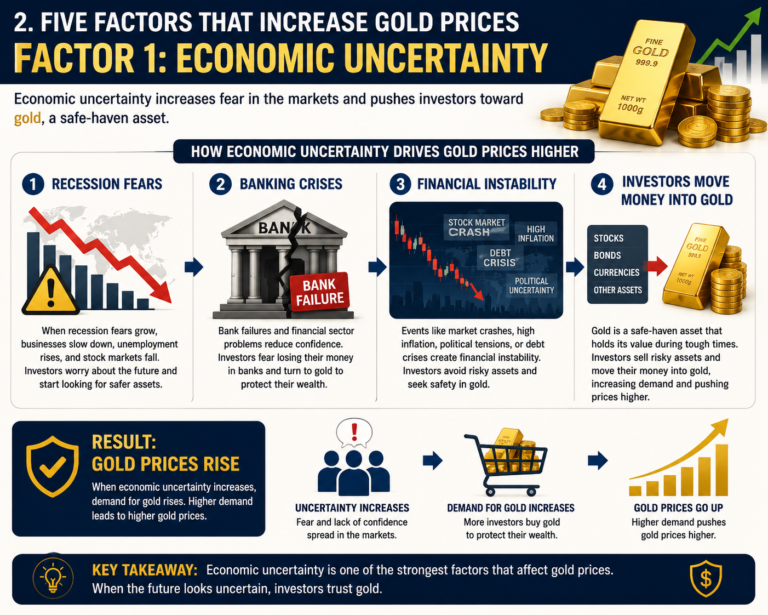
Economic uncertainty is one of the most powerful factors that affect gold prices. Whenever investors become worried about the health of the global economy, they often move their money into gold because it is considered a safe and reliable asset.
Recession Fears
During a recession, businesses slow down, unemployment may rise, and financial markets often become volatile. As confidence in the economy weakens, investors look for safer investments. This increase in demand is one of the major factors that affect gold prices, often causing them to rise.
Banking Crises
Bank failures and financial sector problems can quickly reduce investor confidence. When people fear that banks or financial institutions are unstable, they often buy gold to protect their wealth. This surge in demand makes banking crises one of the key factors that affect gold prices.
Financial Instability
Political uncertainty, stock market crashes, high inflation, or debt crises can create financial instability around the world. During these periods, investors tend to avoid risky assets and choose gold instead. As demand increases, gold prices usually move higher, showing why financial instability remains one of the most important factors that affect gold prices.
Investors Move Money into Gold
Gold has earned a reputation as a safe-haven asset because it tends to hold its value during difficult economic times. When uncertainty increases, investors often sell stocks and other risky investments to buy gold. This shift in investment flows boosts demand and is one of the strongest factors that affect gold prices.
Understanding how economic uncertainty influences investor behavior helps traders anticipate market movements. Since fear and uncertainty often drive demand for gold, they remain among the most significant factors that affect gold prices and are closely watched by professional traders worldwide.
Factor #2: Inflation
Inflation is one of the most important factors that affect gold prices because it reduces the purchasing power of money. As the cost of goods and services increases, each dollar buys less than before. During these periods, investors often look for assets that can protect their wealth, and gold becomes a popular choice.
Inflation Reduces Purchasing Power
When inflation rises, the value of paper currency gradually declines. Everyday expenses such as food, fuel, housing, and healthcare become more expensive. As a result, many investors move their money away from cash and into gold. This shift in demand is one of the key factors that affect gold prices, often pushing prices higher.
Gold Preserves Wealth
Gold has been used as a store of value for centuries. Unlike paper currencies, gold cannot be printed by governments or central banks, making it a reliable hedge against inflation. During periods of rising inflation, investors buy gold to preserve their purchasing power and protect their savings. This is why inflation remains one of the strongest factors that affect gold prices.
Investors Buy Gold During High Inflation
High inflation increases uncertainty in financial markets. Investors often reduce their exposure to cash and other assets that may lose value and instead purchase gold. As more investors buy gold, demand increases and prices tend to rise. This increased demand is one of the major factors that affect gold prices in both the short and long term.
Recent Examples
Recent years provide clear examples of how inflation affects gold prices. In 2022, inflation reached multi-decade highs in many countries due to supply chain disruptions, rising energy costs, and strong consumer demand. As inflation surged, investors increased their purchases of gold to protect their wealth.
In 2023 and 2024, inflation remained above central bank targets in many economies despite higher interest rates. Concerns about persistent inflation continued to support demand for gold, contributing to strong price performance. By 2025, gold reached record highs as investors responded to ongoing economic uncertainty, inflation concerns, and strong buying from central banks.
Factor #3: Falling Interest Rates
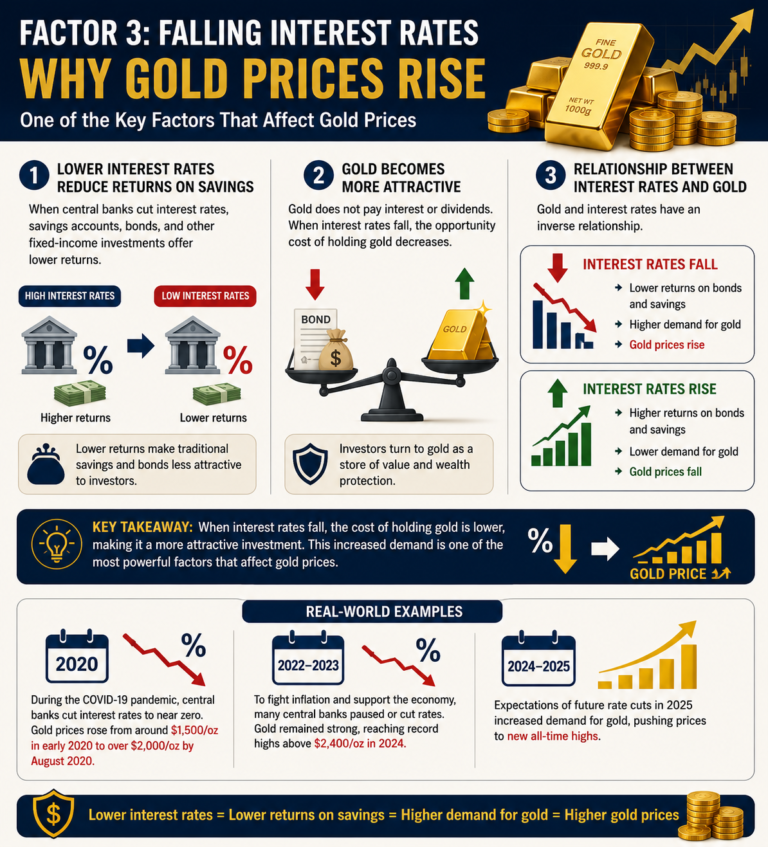
Falling interest rates are one of the most important factors that affect gold prices. When central banks reduce interest rates, the returns on savings accounts, bonds, and other fixed-income investments decline. As these investments become less attractive, many investors turn to gold as an alternative store of value.
Lower Interest Rates Reduce Returns on Savings
Interest rates determine how much investors can earn from savings accounts, certificates of deposit (CDs), and government bonds. When rates fall, these investments generate lower returns. Since gold does not pay interest or dividends, it becomes more competitive when interest rates are low. This is why lower interest rates are among the key factors that affect gold prices.
Gold Becomes More Attractive
Gold is considered a non-yielding asset because it does not generate regular income. However, when interest rates fall, the opportunity cost of holding gold decreases. Investors are less likely to miss out on high returns from savings or bonds, making gold a more attractive investment. As demand for gold rises, prices often increase, making lower interest rates one of the major factors that affect gold prices.
Relationship Between Interest Rates and Gold
Gold and interest rates generally have an inverse relationship. When interest rates decrease, gold prices often move higher because investors seek assets that can preserve wealth. Conversely, when interest rates rise, investors may shift their money into interest-bearing investments, reducing demand for gold and putting downward pressure on prices.
This relationship is one of the most closely watched factors that affect gold prices by traders and investors. For example, during periods when central banks cut interest rates to support economic growth, gold has often experienced strong price rallies as investor demand increases.
Understanding how interest rates influence investor behavior can help traders anticipate market movements. Since monetary policy directly impacts investment decisions, falling interest rates remain one of the most influential factors that affect gold prices, making them an essential indicator for anyone trading or investing in gold.
Factor #4: Weak U.S. Dollar
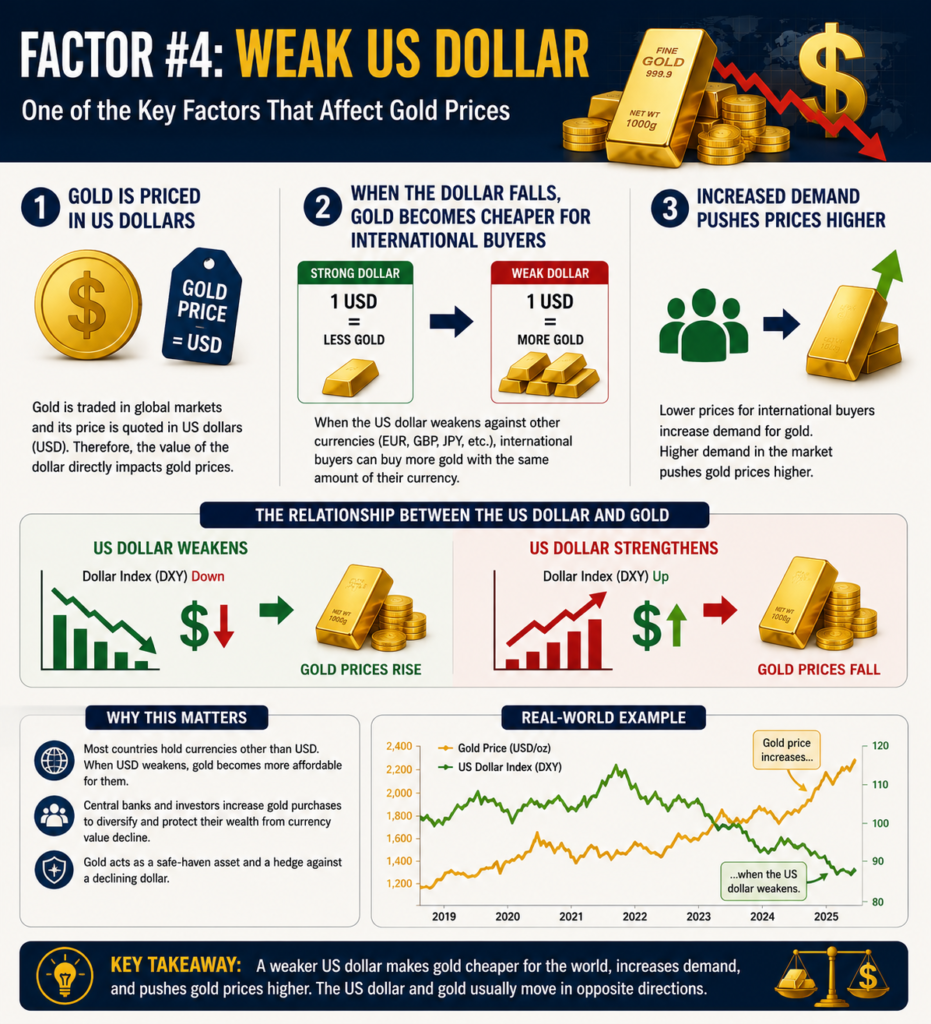
A weak U.S. dollar is one of the most important factors that affect gold prices. Since gold is traded globally in U.S. dollars, any change in the value of the dollar can have a significant impact on gold prices. In most cases, when the U.S. dollar weakens, gold prices tend to rise.
Gold Is Priced in U.S. Dollars
Gold is bought and sold in international markets using the U.S. dollar (USD). This means the value of the dollar directly influences how much investors around the world pay for gold. Because of this relationship, the strength of the U.S. dollar is one of the key factors that affect gold prices.
When the Dollar Falls, Gold Becomes Cheaper for International Buyers
When the U.S. dollar loses value against other currencies, buyers using euros, pounds, yen, or other currencies can purchase gold at a lower cost. This makes gold more affordable for international investors and increases global demand. As demand grows, gold prices often rise, making a weaker dollar one of the major factors affecting gold prices.
Increased Demand Pushes Gold Prices Higher
A declining U.S. dollar encourages both individual and institutional investors to buy more gold. Many investors also use gold as a hedge against a weakening dollar because it helps preserve purchasing power. This increase in buying activity raises demand and often pushes gold prices upward.
For example, during periods when the U.S. Dollar Index (DXY) declines, gold has frequently experienced strong upward price movements. Traders closely monitor the dollar because its performance is one of the most reliable factors that affect gold prices in the global market.
Understanding the relationship between the U.S. dollar and gold can help traders identify profitable opportunities. Since gold and the U.S. dollar generally move in opposite directions, a weaker dollar remains one of the most influential factors that affect gold prices and should always be included in your market analysis.
Factor #5: Geopolitical Tensions
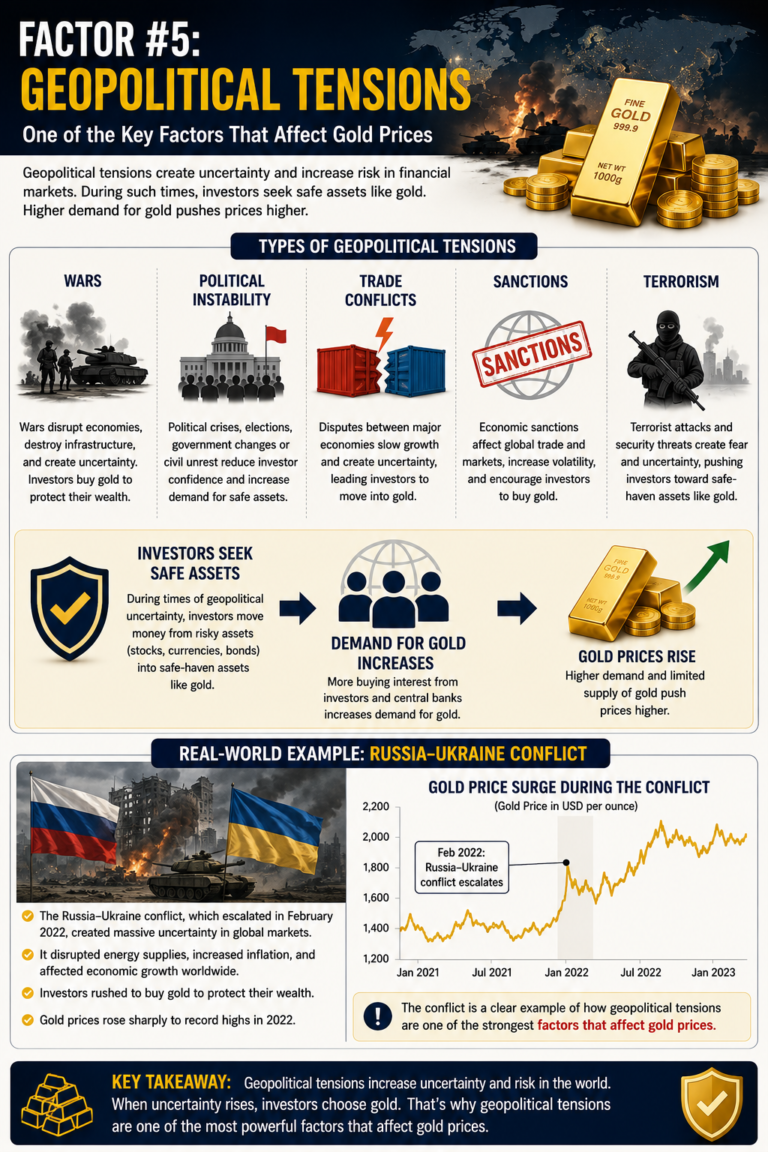
Geopolitical tensions are among the most powerful factors affecting gold prices. Events such as wars, political instability, trade disputes, economic sanctions, and terrorism create uncertainty in global financial markets. During these periods, investors often move their money into gold because it is considered a safe-haven asset. As demand for gold increases, prices usually move higher.
Wars
Wars can disrupt global trade, reduce economic growth, and increase uncertainty. Investors become concerned about the impact on financial markets and often buy gold to protect their wealth. This increased demand makes wars one of the major factors that affect gold prices.
Political Instability
Political crises, government changes, elections, or civil unrest can weaken investor confidence. When the future of a country or region becomes uncertain, investors seek safer investments. Gold is often the preferred choice, making political instability one of the key factors that affect gold prices.
Trade Conflicts
Trade disputes between major economies can slow global economic growth and disrupt international supply chains. Increased uncertainty encourages investors to reduce exposure to risky assets and increase their holdings of gold. As demand rises, gold prices generally increase.
Economic Sanctions
Sanctions imposed on countries can affect global trade, energy markets, and investor confidence. These measures often increase market volatility and encourage investors to move their capital into gold. This is another reason sanctions are among the important factors that affect gold prices.
Terrorism
Terrorist attacks and security threats create fear and uncertainty in financial markets. During such events, investors typically avoid risky investments and purchase safe-haven assets like gold. As buying pressure increases, gold prices often rise.
Investors Seek Safe Assets
Gold has earned its reputation as a safe-haven asset because it tends to retain its value during times of crisis. Whenever geopolitical risks increase, institutional and retail investors often shift their money from stocks and other volatile assets into gold. This surge in demand is one of the strongest factors that affect gold prices, especially during periods of global uncertainty.
Real-World Example: Russia–Ukraine Conflict
The Russia–Ukraine conflict, which escalated in 2022, is a clear example of how geopolitical tensions influence the gold market. The conflict disrupted global energy supplies, increased inflation, and created significant uncertainty in financial markets. As a result, investors around the world rushed to buy gold to protect their wealth, driving gold prices sharply higher. This event demonstrated why geopolitical tensions remain one of the most influential factors that affect gold prices and why traders closely monitor global political developments before making investment decisions.
3. Five Factors That Decrease Gold Prices
Factor #1: Strong U.S. Dollar
A strong U.S. dollar is one of the most important factors that affect gold prices in the opposite direction. Since gold is priced in U.S. dollars, an increase in the value of the dollar usually puts downward pressure on gold prices. When the dollar strengthens, gold becomes more expensive for buyers using other currencies, reducing global demand.
Strong Dollar Makes Gold More Expensive Globally
Gold is traded worldwide in U.S. dollars. When the dollar gains value against currencies such as the euro, pound, or yen, international investors need more of their local currency to buy the same amount of gold. This higher cost discourages many buyers and makes a strong dollar one of the major factors that affect gold prices.
Demand Falls
As gold becomes more expensive for international buyers, demand often declines. Lower demand from investors, jewelry manufacturers, and central banks can reduce buying pressure in the market. This decrease in demand is one of the key factors that affect gold prices, especially during periods when the U.S. dollar is performing well.
Gold Prices Decline
When demand for gold falls because of a stronger U.S. dollar, gold prices typically move lower. Investors may also shift their money into dollar-denominated assets, such as government bonds or savings accounts, which become more attractive when the dollar is strong. This further reduces interest in gold and contributes to falling prices.
For example, when the U.S. Dollar Index (DXY) rises sharply, gold often experiences downward pressure. Traders closely watch the movement of the U.S. dollar because it is one of the most influential factors that affect gold prices in the global market.
Understanding the relationship between the U.S. dollar and gold can help traders identify market trends more accurately. Since a stronger dollar generally leads to weaker gold demand, it remains one of the most significant factors that affect gold prices and should always be included in your gold market analysis.
Factor #2: Rising Interest Rates
Interest rates are one of the biggest factors influencing the price of gold. Since gold does not pay interest or dividends, changes in interest rates can significantly affect investor demand.
1. Higher Yields on Bonds and Savings Accounts
When central banks raise interest rates, financial products such as government bonds, treasury bills, fixed deposits, and savings accounts begin offering higher returns. These investments become more attractive because they provide investors with a guaranteed income.
For example, if a government bond starts paying a 5% annual return instead of 2%, many investors prefer earning that steady income rather than holding gold, which generates no regular cash flow.
2. Investors Move Money Out of Gold
As interest-bearing investments become more profitable, investors often reduce their gold holdings and shift their money into assets that offer better returns. This movement of capital decreases the demand for gold in the market.
Lower demand usually puts downward pressure on gold prices. Large institutional investors, hedge funds, and banks frequently adjust their portfolios based on interest rate changes, which can cause significant price movements in gold.
3. Opportunity Cost of Holding Gold Increases
The opportunity cost is the benefit an investor gives up by choosing one investment over another.
Gold does not produce income such as interest or dividends. When interest rates are low, the opportunity cost of holding gold is relatively small because other investments also offer low returns.
However, when interest rates rise, investors give up the chance to earn higher returns from bonds or savings accounts by holding gold. As a result, the opportunity cost of owning gold increases, making gold less attractive as an investment.
Example
Suppose you have $10,000 to invest:
- Option A: Buy gold, which pays no interest.
- Option B: Invest in a government bond paying 5% annual interest.
If you choose gold, you miss the opportunity to earn $500 in interest over one year. This lost income is the opportunity cost of holding gold.
Factor #3: Strong Economic Growth
A strong economy is generally considered negative for gold prices because investors become more confident and are willing to take greater risks in pursuit of higher returns.
1. Stock Markets Perform Well
During periods of strong economic growth, companies usually earn higher profits as consumer spending and business activity increase. This often leads to rising stock prices and strong performance in the stock market.
As stock markets deliver better returns, investors are more likely to invest in equities rather than gold. Since gold does not generate income or dividends, it becomes less attractive compared to growing companies.
2. Investors Prefer Risk Assets
When the economy is healthy, investor confidence increases. Instead of protecting their money, investors focus on growing their wealth by investing in risk assets such as:
- Stocks
- Corporate bonds
- Exchange-Traded Funds (ETFs)
- Real estate
- Cryptocurrencies (for some investors)
These assets have the potential to generate higher returns during economic expansion. As a result, money flows out of safe assets like gold and into investments that offer greater profit opportunities.
3. Less Demand for Safe-Haven Investments
Gold is known as a safe-haven asset, meaning investors buy it to protect their wealth during times of uncertainty, financial crises, inflation, or geopolitical tensions.
However, when the economy is growing strongly, unemployment is low, businesses are expanding, and financial markets are stable, investors feel less need for protection. This reduces the demand for gold.
As demand falls, gold prices often decline.
Example
Imagine the economy is growing rapidly:
- Companies report strong earnings.
- Stock markets rise by 15–20% in a year.
- Business confidence remains high.
- Unemployment falls to low levels.
In this environment, many investors choose stocks because they expect higher returns. Since fewer investors buy gold, its demand decreases, which can put downward pressure on its price.
Factor# 4: Reduced Inflation
Inflation is one of the main reasons investors buy gold. When inflation declines and prices become more stable, gold usually becomes less attractive because investors no longer need as much protection against the rising cost of living.
1. Stable Prices Reduce the Need for Inflation Hedges
Inflation refers to the rate at which the prices of goods and services increase over time. When inflation is high, the purchasing power of money decreases, meaning the same amount of money buys fewer goods.
Gold is often considered an inflation hedge because it tends to preserve its value when the purchasing power of paper currency declines.
However, when inflation is low and prices remain stable, people become more confident that their cash and other investments will maintain their value. As a result, there is less need to invest in gold as protection against inflation.
2. Investors Shift Away from Gold
When inflation is under control, investors often move their money from gold into assets that offer higher returns, such as:
- Stocks
- Government bonds
- Corporate bonds
- Mutual funds
These investments can generate income through dividends or interest, while gold does not produce a regular cash flow. As more investors sell gold and buy other assets, the demand for gold decreases.
Lower demand generally causes gold prices to fall.
Example
Suppose inflation falls from 8% to 2%.
- Prices become more stable.
- The purchasing power of money remains relatively steady.
- Investors feel less concerned about protecting their wealth from inflation.
Factor# 5: Increased Gold Supply
The price of gold is determined by the balance between supply and demand. When the supply of gold increases while demand remains the same, gold prices usually decline because more gold is available in the market than buyers require.
1. Higher Mining Production
Gold mining is the primary source of new gold entering the global market. When mining companies discover new deposits or improve their production efficiency, they produce more gold.
An increase in mining output adds more gold to the market. If investor and consumer demand does not increase at the same pace, the additional supply can create downward pressure on gold prices.
For example, if global gold mines produce significantly more gold in a year while demand stays constant, the extra supply may cause prices to fall.
2. Central Bank Gold Sales
Central banks hold large reserves of gold as part of their foreign exchange reserves. Sometimes, they decide to sell a portion of their gold reserves for reasons such as:
- Raising funds for government or financial needs.
-
- Rebalancing their reserve assets.
- Increasing holdings of foreign currencies or government bonds.
- Changing their monetary or reserve management strategy.
When central banks sell large quantities of gold, a significant amount of gold enters the market. This increases the available supply, which can reduce gold prices if demand does not rise accordingly.
However, it is important to note that many central banks are also major buyers of gold. Therefore, whether gold prices rise or fall depends on the overall balance between central bank purchases and sales.
3. Recycling of Gold
Gold can be recycled from old jewelry, electronic devices, industrial products, and scrap materials. Unlike many other commodities, gold retains its quality after recycling and can be refined into new products.
When gold prices are high, more individuals and businesses choose to sell old jewelry or scrap gold for recycling. This increases the amount of gold available in the market without requiring new mining.
The additional recycled gold increases overall supply, which may contribute to lower prices if demand remains unchanged.