Introduction
The Gold and US Dollar Correlation is one of the most important relationships in the financial markets. Whether you’re a forex trader, gold investor, or someone interested in understanding global economics, knowing how gold and the US Dollar interact can help you make better trading and investment decisions. Since gold is priced in US Dollars worldwide, changes in the value of the dollar often have a direct impact on gold prices.
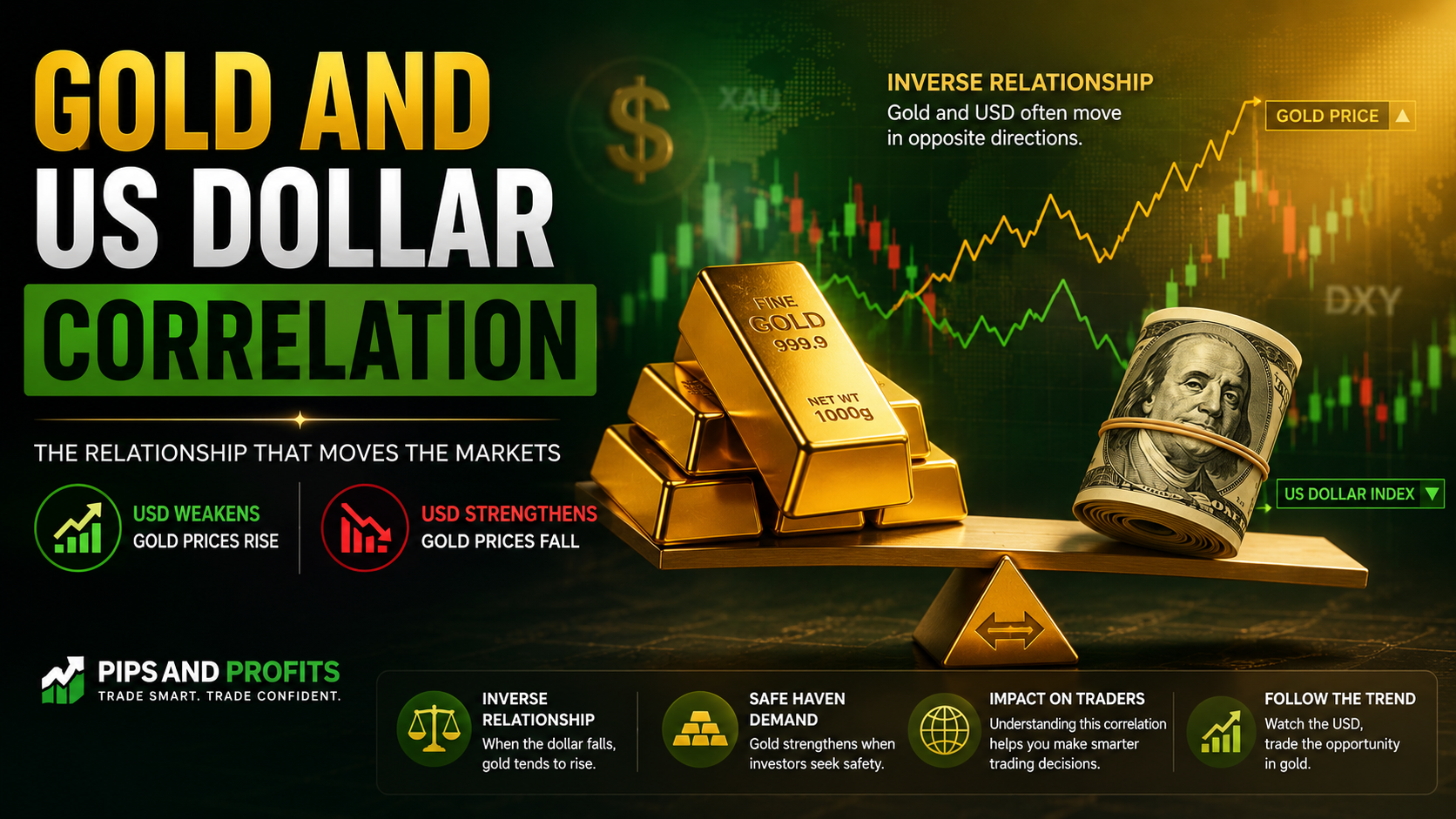
In most market conditions, the Gold and US Dollar Correlation is negative, meaning the two assets tend to move in opposite directions. When the US Dollar strengthens, gold prices often decline because gold becomes more expensive for buyers using other currencies. On the other hand, when the dollar weakens, gold usually becomes more affordable, increasing demand and pushing prices higher.
Understanding the Gold and US Dollar Correlation is especially important during major economic events such as Federal Reserve (FOMC) meetings, inflation reports (CPI), Non-Farm Payroll (NFP) releases, and interest rate decisions. These events can significantly influence both the US Dollar and gold, creating trading opportunities for those who know how to interpret market movements.
Although the inverse relationship between gold and the US Dollar is well known, it is not always perfect. During periods of financial crises, geopolitical tensions, or extreme market uncertainty, both gold and the US Dollar can rise together as investors seek safe-haven assets. Recognizing when this happens can prevent costly trading mistakes.
In this guide, you’ll learn everything you need to know about the Gold and US Dollar Correlation, including why it exists, the factors that influence it, how professional traders use it in their market analysis, and practical tips to improve your gold trading strategy. By the end of this article, you’ll have a clear understanding of how this powerful relationship shapes the global financial markets.

What Is the Gold and US Dollar Correlation?
The Gold and US Dollar Correlation refers to the relationship between the price of gold and the value of the US Dollar. In most market conditions, these two assets have an inverse relationship. This means that when the US Dollar becomes stronger, gold prices often fall, and when the dollar weakens, gold prices usually rise.
Understanding the Gold and US Dollar Correlation is essential for traders, investors, and anyone interested in financial markets. Since gold is priced globally in US Dollars, changes in the value of the dollar directly affect the cost of gold for buyers around the world. This is one of the main reasons why the Gold and USD correlation is a popular topic among gold traders.
A stronger US Dollar makes gold more expensive for investors using other currencies. As a result, demand for gold may decrease, putting downward pressure on prices. On the other hand, a weaker dollar makes gold more affordable internationally, which can increase demand and support higher prices. This explains how the US Dollar affects gold prices in the global market.
Many traders closely monitor the US Dollar Index (DXY) because it measures the strength of the US Dollar against a basket of major currencies. The DXY impact on gold often provides valuable clues about potential price movements. When the Dollar Index rises sharply, gold frequently faces selling pressure. When the index falls, gold often gains momentum.
Although the Gold and US Dollar Correlation is generally negative, it is not always perfect. During periods of economic uncertainty, geopolitical tensions, or financial crises, both gold and the US Dollar may rise together as investors look for safe-haven assets. This is why traders should analyze market conditions instead of relying solely on the correlation.
Professional traders use the Gold and US Dollar Correlation alongside technical analysis, economic indicators, and market sentiment. Combining these factors provides a clearer picture of market direction and helps traders make more informed decisions rather than depending on a single indicator.
Why Gold and the US Dollar Usually Move in Opposite Directions
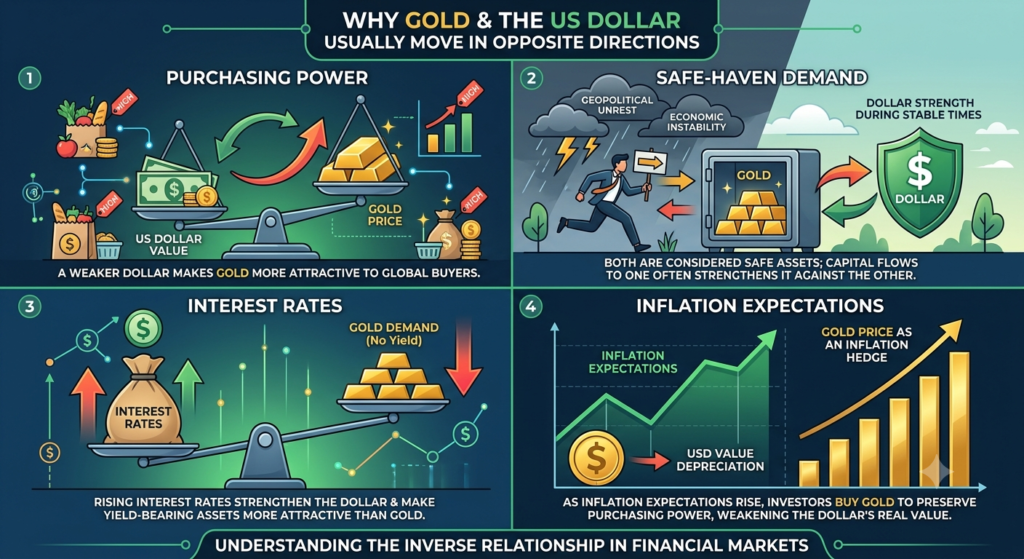
One of the most important concepts every investor should understand is the Gold and US Dollar Correlation. In most market conditions, gold and the US dollar have an inverse relationship, meaning they tend to move in opposite directions. When the US dollar strengthens, gold prices often decline.
When the dollar weakens, gold prices frequently rise. This relationship is not perfect, but it has been a reliable pattern in global financial markets for decades. Understanding the Gold and US Dollar Correlation can help traders make better decisions, especially during periods of economic uncertainty, Federal Reserve meetings, and major economic data releases.
Purchasing Power
One of the primary reasons behind the Gold and US Dollar Correlation is purchasing power. Since gold is internationally priced in US dollars, changes in the value of the dollar directly affect how affordable gold is for buyers around the world. When the US dollar appreciates against other currencies, investors in Europe, Asia, and other regions need more of their local currency to buy the same amount of gold.
On the other hand, when the US dollar weakens, gold becomes less expensive for international buyers. Lower prices in local currency terms can increase demand from both retail and institutional investors, often supporting higher gold prices. This dynamic explains why purchasing power remains one of the strongest drivers of the Gold and US Dollar Correlation.
Safe-Haven Demand
Gold and the US dollar are both considered safe-haven assets, but investors often favor one over the other depending on the type of market risk. During periods of financial stress, investors may rush into the US dollar because it is the world’s primary reserve currency and offers high liquidity. This increased demand can strengthen the dollar while reducing interest in gold, reinforcing the typical inverse relationship.
However, there are exceptional situations where both assets rise together. During severe geopolitical conflicts, banking crises, or global recessions, investors may simultaneously seek the security of both physical gold and the US dollar. While these periods temporarily weaken the usual Gold and US Dollar Correlation, they are generally the exception rather than the rule.
Interest Rates
Interest rates are another major factor influencing the Gold and US Dollar Correlation. The Federal Reserve’s monetary policy has a significant impact on both assets. When the Fed raises interest rates, US Treasury yields generally increase, making dollar-denominated investments more attractive. As investors shift their money into interest-bearing assets, demand for the US dollar often rises.
Gold, unlike bonds or savings accounts, does not generate interest or dividends. As a result, higher interest rates increase the opportunity cost of holding gold, which can reduce investor demand and lead to lower prices. Conversely, when the Federal Reserve cuts interest rates or signals a more accommodative policy, the US dollar often weakens while gold becomes more attractive, strengthening the inverse Gold and US Dollar Correlation.
Inflation Expectations
Inflation expectations also play a key role in explaining why gold and the US dollar usually move in opposite directions. Gold has long been viewed as a hedge against inflation because it tends to preserve purchasing power over time. When investors expect inflation to rise, they often increase their gold holdings to protect their wealth, which can drive gold prices higher.
At the same time, persistent inflation may reduce the purchasing power of the US dollar if it is not accompanied by sufficiently higher interest rates. This combination of rising gold demand and a weaker dollar reinforces the negative Gold and US Dollar Correlation. However, if the Federal Reserve responds aggressively to inflation by raising interest rates, the stronger dollar may temporarily offset gold’s gains, demonstrating that multiple economic factors influence this relationship.
Understanding the Gold and US Dollar Correlation allows traders and investors to interpret market movements more effectively. By monitoring purchasing power, safe-haven demand, interest rates, and inflation expectations together, you can better anticipate potential changes in gold prices and make more informed trading decisions.
How the US Dollar Index (DXY) Affects Gold Prices
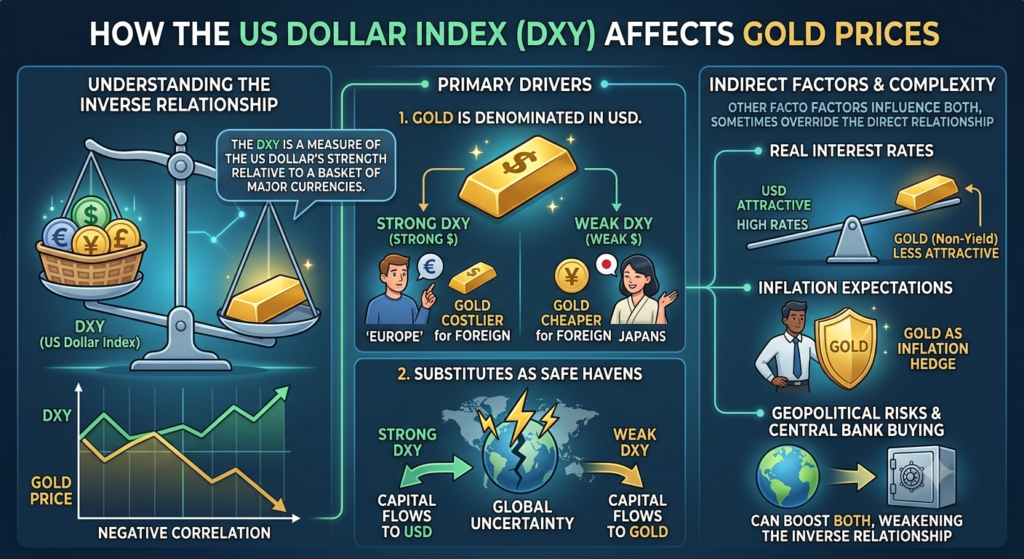
The US Dollar Index (DXY) is one of the most important indicators for understanding Why Is Gold Priced in US Dollars and how gold prices move in the global market. The DXY measures the strength of the US dollar against a basket of six major currencies, including the euro, Japanese yen, British pound, Canadian dollar, Swedish krona, and Swiss franc. Since gold is internationally priced in US dollars, changes in the value of the dollar often have a direct impact on gold prices.
When the DXY rises, it means the US dollar is strengthening relative to other major currencies. A stronger dollar makes gold more expensive for buyers using foreign currencies, which can reduce global demand for the precious metal. As demand weakens, gold prices often come under downward pressure. This inverse relationship is one of the key reasons traders study both the DXY and gold charts together. Understanding Why Is Gold Priced in US Dollars helps investors recognize why a stronger dollar frequently coincides with lower gold prices.
On the other hand, when the DXY falls, the US dollar weakens against other currencies. A weaker dollar makes gold more affordable for international buyers, increasing demand from investors, central banks, and jewelry manufacturers. Higher demand can push gold prices upward, especially during periods of economic uncertainty or rising inflation. This is another practical example of Why Is Gold Priced in US Dollars, as fluctuations in the dollar’s value directly influence the purchasing power of global gold buyers.
y understanding Why Is Gold Priced in US Dollars and monitoring the US Dollar Index alongside other market indicators, traders can develop a more complete view of market sentiment and improve their chances of making informed trading decisions.
What Happens to Gold When the US Dollar Strengthens?
The Gold and US Dollar Correlation is one of the most important relationships in the financial markets. In most cases, gold and the US dollar move in opposite directions. When the US dollar strengthens, gold prices often decline because gold becomes more expensive for buyers using other currencies. Understanding the Gold and US Dollar Correlation helps traders anticipate potential price movements and make better trading decisions.
Gold Becomes More Expensive Globally
A stronger US dollar increases the cost of gold for international buyers. Since gold is priced in US dollars, investors using euros, yen, pounds, or other currencies must pay more when the dollar rises. This often reduces global demand, causing gold prices to fall. This is a key example of the Gold and US Dollar Correlation in action.
Investor Demand May Decline
When the US dollar gains strength, investors often shift their money toward dollar-denominated assets such as US Treasury bonds and savings instruments. These assets can offer higher returns, especially when interest rates are rising. As a result, demand for gold may decrease, reinforcing the negative Gold and US Dollar Correlation.
Higher Interest Rates Add Pressure
A stronger dollar is frequently associated with higher US interest rates. Since gold does not generate interest or dividends, investors may prefer assets that provide regular income. This reduces the attractiveness of gold and can lead to lower prices, strengthening the inverse Gold and US Dollar Correlation.
Gold Prices Often Move Lower
In normal market conditions, rising dollar strength places downward pressure on gold prices. Although other factors like geopolitical tensions or central bank buying can influence the market, the Gold and US Dollar Correlation remains one of the strongest indicators that traders use to understand short-term and long-term movements in gold prices.
What Happens to Gold When the US Dollar Weakens?
The Gold and US Dollar Correlation shows that gold and the US dollar usually move in opposite directions. When the US dollar weakens, gold prices often rise because the precious metal becomes more affordable for buyers around the world. This inverse relationship is one of the key reasons traders closely monitor both gold and the US dollar before making investment decisions.
Gold Becomes Cheaper for Global Buyers
A weaker US dollar reduces the cost of gold for investors using foreign currencies. As gold becomes more affordable, demand from international buyers often increases. This higher demand can push gold prices upward, demonstrating the negative Gold and US Dollar Correlation.
Investor Demand for Gold Increases
When the US dollar loses value, some investors look for alternative assets to preserve their wealth. Gold is widely regarded as a safe-haven investment and a store of value during periods of currency weakness. This shift in investor sentiment often strengthens the Gold and US Dollar Correlation, with gold benefiting from increased buying activity.
Inflation Concerns Support Gold
A weakening dollar is sometimes linked to rising inflation expectations. Since gold has historically acted as a hedge against inflation, investors may increase their gold holdings to protect their purchasing power. This additional demand often contributes to higher gold prices and reinforces the inverse Gold and US Dollar Correlation.
Gold Prices Often Move Higher
In normal market conditions, a weaker US dollar creates favorable conditions for gold. Although other factors such as interest rates, geopolitical events, and central bank purchases also influence prices, the Gold and US Dollar Correlation remains one of the most reliable indicators for understanding why gold often rises when the US dollar weakens.
Key Economic Events That Affect Gold and the US Dollar
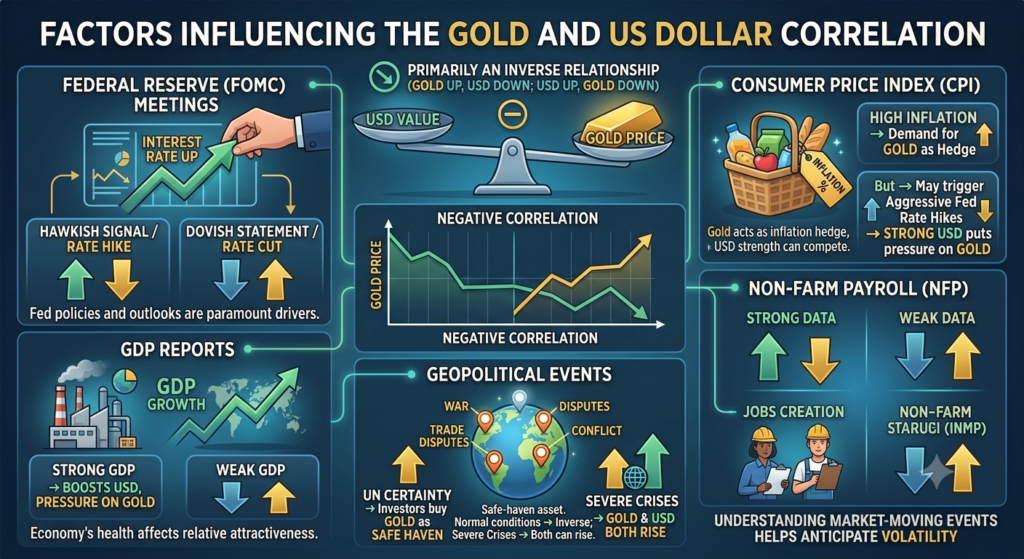
The Gold and US Dollar Correlation is heavily influenced by major economic events and financial reports. These events can strengthen or weaken the US dollar, which often causes gold prices to move in the opposite direction. Understanding these market-moving events helps traders anticipate volatility and make more informed trading decisions.
Federal Reserve (FOMC) Meetings
Federal Reserve (FOMC) meetings are among the most important events affecting the Gold and US Dollar Correlation. When the Fed raises interest rates or signals a hawkish outlook, the US dollar often strengthens while gold prices decline. Conversely, dovish statements or interest rate cuts can weaken the dollar and support higher gold prices.
Consumer Price Index (CPI)
The Consumer Price Index (CPI) measures inflation in the United States and plays a major role in the Gold and US Dollar Correlation. Higher-than-expected inflation can increase demand for gold as an inflation hedge. However, if rising inflation leads the Federal Reserve to raise interest rates aggressively, the stronger US dollar may temporarily put pressure on gold prices.
Non-Farm Payroll (NFP)
The monthly Non-Farm Payroll (NFP) report provides insight into the strength of the US labor market. Strong employment data often boosts the US dollar because it signals a healthy economy and may encourage higher interest rates. As a result, the Gold and US Dollar Correlation often causes gold prices to move lower after stronger-than-expected NFP data.
GDP Reports
Gross Domestic Product (GDP) reports measure the overall health of the US economy. Strong GDP growth typically supports the US dollar by increasing confidence in the economy, which can put downward pressure on gold. Weak GDP figures may have the opposite effect, strengthening the inverse Gold and US Dollar Correlation as investors turn to gold.
Geopolitical Events
Wars, political instability, trade disputes, and global conflicts can significantly impact the Gold and US Dollar Correlation. During periods of uncertainty, investors often buy gold as a safe-haven asset. In severe crises, both gold and the US dollar may rise together as investors seek security, although under normal market conditions they generally move in opposite directions.
Historical Examples of Gold and US Dollar Correlation
The Gold and US Dollar Correlation has been observed during many major economic and financial events throughout history. While gold and the US dollar do not always move in opposite directions, historical examples show that they often have an inverse relationship. These examples help traders understand how economic conditions can influence both assets.
2008 Global Financial Crisis
During the 2008 financial crisis, the Gold and US Dollar Correlation briefly changed as investors rushed into both gold and the US dollar for safety. Although both assets initially gained due to extreme market uncertainty, gold continued to rally in the following years as interest rates remained low and concerns about the global economy persisted.
2020 COVID-19 Pandemic
The COVID-19 pandemic provided another strong example of the Gold and US Dollar Correlation. In the early stages of the crisis, investors bought US dollars for liquidity, causing the dollar to strengthen temporarily. As central banks introduced stimulus measures and the dollar weakened, gold surged to record highs as investors sought protection against uncertainty and inflation.
2022 Federal Reserve Rate Hikes
In 2022, the Federal Reserve aggressively raised interest rates to combat inflation. Higher interest rates strengthened the US dollar, while gold prices faced downward pressure for much of the year. This period clearly demonstrated the traditional Gold and US Dollar Correlation, where a stronger dollar generally led to weaker gold prices.
2023–2024 Central Bank Gold Buying
During 2023 and 2024, central banks around the world significantly increased their gold reserves. Despite periods of US dollar strength, gold prices remained resilient because strong institutional demand supported the market. This example shows that while the Gold and US Dollar Correlation is an important indicator, factors such as central bank purchases and geopolitical risks can sometimes outweigh the impact of the US dollar.
Gold vs US Dollar: Which Is a Better Safe-Haven Asset?
The Gold and US Dollar Correlation is often discussed when investors look for safe-haven assets during economic uncertainty. Both gold and the US dollar are considered reliable stores of value, but they serve different purposes in a diversified investment strategy. The choice between them depends on market conditions, inflation expectations, and investor goals.
Why Investors Choose Gold
Gold has been a trusted safe-haven asset for thousands of years. During periods of inflation, currency devaluation, or financial instability, investors often buy gold to preserve their wealth. The Gold and US Dollar Correlation shows that gold tends to perform well when the US dollar weakens, making it a popular hedge against currency risk.
Why Investors Choose the US Dollar
The US dollar is the world’s leading reserve currency and is highly liquid. During financial crises, investors frequently move their money into US dollar-denominated assets because of their stability and global acceptance. This demand can strengthen the dollar, highlighting the inverse Gold and US Dollar Correlation that traders often observe.
Gold Offers Inflation Protection
One advantage of gold is its ability to protect purchasing power during periods of rising inflation. When inflation increases and the value of paper currencies declines, gold often becomes more attractive. This is one reason why the Gold and US Dollar Correlation tends to favor gold during inflationary environments.
The US Dollar Provides Liquidity
The US dollar offers unmatched liquidity and is widely used in global trade and finance. Investors can quickly access cash, purchase assets, or meet financial obligations using dollars. During short-term market stress, the dollar may outperform gold because of its ease of use and strong demand.
Which Is Better?
There is no single answer because both assets have unique advantages. Gold is often preferred for long-term wealth preservation and inflation protection, while the US dollar is favored for liquidity and short-term safety. Understanding the Gold and US Dollar Correlation can help investors determine when one asset may have an advantage over the other based on changing market conditions.
Conclusion
Understanding the Gold vs US Dollar correlation is essential for anyone trading or investing in the financial markets. In most situations, gold and the US dollar have an inverse relationship. When the US dollar strengthens, gold prices often decline because gold becomes more expensive for buyers using other currencies. On the other hand, when the dollar weakens, gold usually gains value as investors seek it as a safe-haven asset.
However, this relationship is not perfect. During periods of major economic uncertainty, financial crises, or geopolitical tensions, both gold and the US dollar can rise together as investors look for safety. This is why traders should never rely on the correlation alone when making trading decisions.